
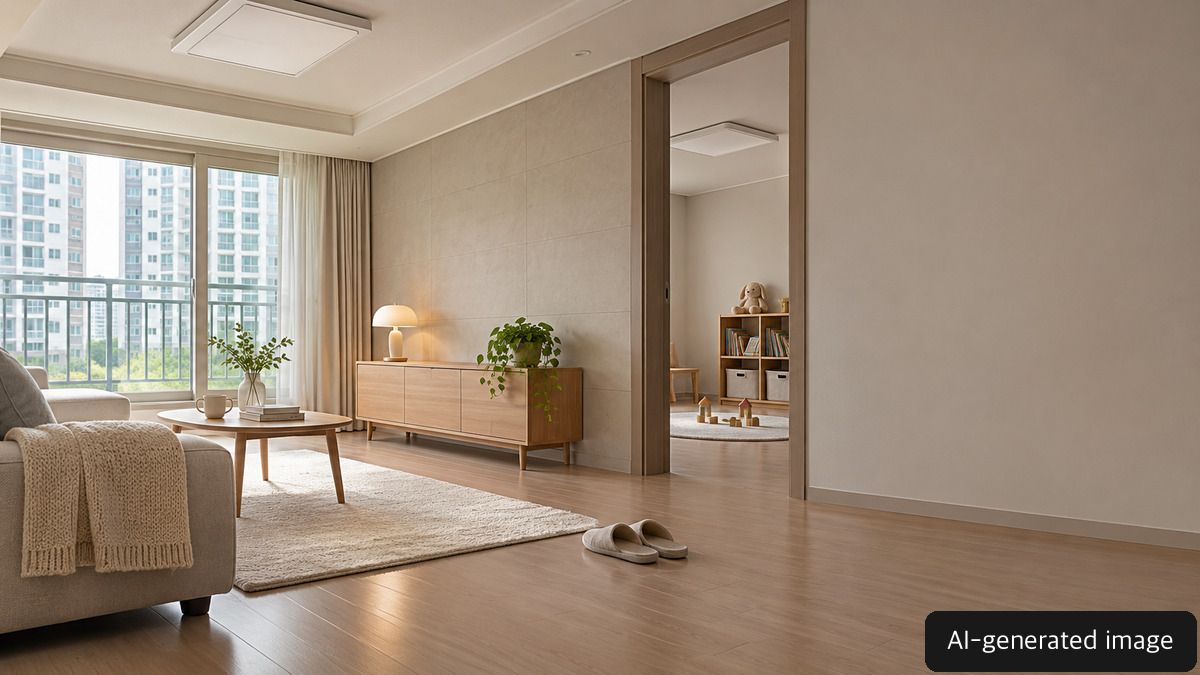
A proposed construction standard, not an order to retrofit existing homes
South Korea's Ministry of Land, Infrastructure and Transport announced an administrative notice open from 6 to 26 November 2026 for a partial amendment to its floor-impact sound-insulation construction standard. The proposal would set both heavy- and light-impact sound-insulation performance thresholds at 49 dB or below for the buildings it covers. The draft supplementary provision proposes commencement six months after the final notice is issued. The issue date is not yet fixed, and the announcement does not establish that the proposal is already in force or that existing homes must be retrofitted.
Which buildings and numbers are involved?
The ministry highlights buildings subject to the Building Act, including multi-family houses, apartment buildings with fewer than 30 households, and officetels. Do not assume that every apartment block falls under this same regulatory category. An individual project's legal classification and permitting stage matter.
The ministry describes the current thresholds for the identified building class as 50 dB or below for heavy impacts and 58 dB or below for light impacts. The proposal would make each 49 dB or below. Heavy impacts are relatively weighty, softer blows; light impacts are relatively lighter, harder blows. A tighter structural-performance number is not a promise of a specific perceived sound level in every apartment or an automatic resolution of neighbour disputes.
What would change in floor construction?
The ministry also plans to update its standard floor structure and the quality and installation-management requirements for cushioning material. It says the existing choice between a certified floor structure, assessed through performance testing, and a standard floor structure, built to the notified specification, would remain. This is not an announcement that all buildings must use one particular product.
What should residents and builders check now?
Residents should first identify the building's legal type, permit history and actual construction. This consultation announcement alone does not establish a new right to compensation or a requirement to replace an existing floor. A current noise complaint or dispute follows separate procedures from this proposed construction-standard amendment.
Builders and designers should read the full proposal under the ministry website's Policy Materials → Legislative and Administrative Notices, then check the final notice, commencement date and any transitional provisions. The ministry says comments can be submitted through its website or by post during the notice period. Do not determine a particular project's applicability from the press-release summary alone.
About the Author
The Life Mokcha editorial team reviews official announcements and primary sources to explain practical information. Check the linked original sources for applicable terms and later updates.