
On October 20, 2026, South Korea's Ministry of Food and Drug Safety (MFDS) issued advice for students 30 days before the 2027 academic-year college entrance exam. Its focus is not a universal allowance of one coffee or energy drink. It asks readers to check the maximum recommended intake for their own category, read the caffeine content of foods they buy, and notice how their body responds. “30 days before” describes the ministry's release timing; this article does not assert an exam date not stated in the release.
A ceiling, not a recommended amount to consume
| Category in the MFDS guidance | Maximum recommended caffeine intake per day |
|---|---|
| Children and adolescents | No more than 2.5 mg per kg of body weight |
| Adults | No more than 400 mg |
| Pregnant people | No more than 300 mg |
For its adolescent examples, the original Korean PDF, pages 1 and 3, gives 125 mg per day at 50 kg and 150 mg at 60 kg. These are ceilings the ministry advises people not to exceed, not targets. “Exam candidate” is not an age category: applying the adult 400 mg figure to every candidate would erase the distinction in the official guidance. Even staying below a numerical ceiling does not guarantee an absence of symptoms.
Foods eaten together matter
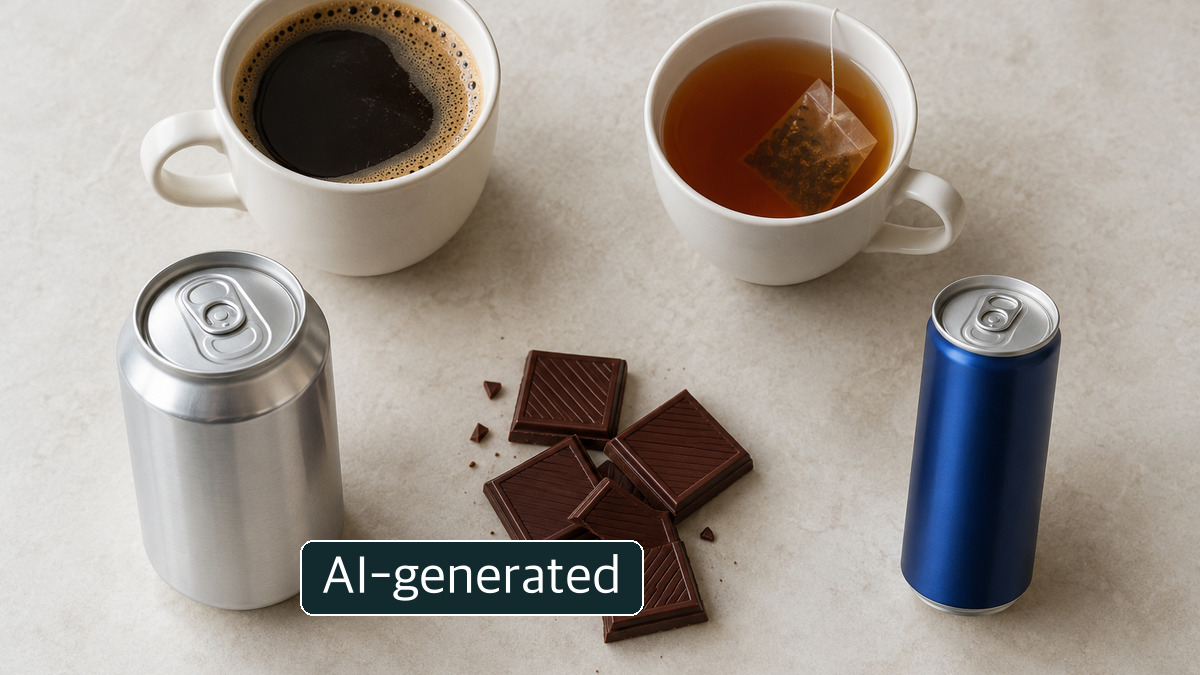
Caffeine can come from tea, coffee-flavored milk, chocolate, cola and energy jellies, in addition to coffee and energy drinks, the MFDS says. When several products are consumed in a day, consider their combined caffeine content. For high-caffeine foods, check the “high caffeine” statement and total caffeine content on the package. The food-by-food figures in the ministry's PDF table on page 3 are expressly illustrative reference figures, not guaranteed values for every brand, serving size or purchase. Read the products you actually have rather than substituting a generic example.
Symptoms can matter below the ceiling
Sensitivity differs by person. The MFDS says to reduce or stop caffeine if palpitations, headache, anxiety or sleep disturbance occurs, even when intake is within the recommended maximum. It also advises avoiding caffeine in the late afternoon or evening, and suggests water, light stretching, sufficient sleep and rest for exam-season wellbeing. It does not prescribe a personalized drinking schedule or say that a given beverage is safe for a particular individual.
A useful reading order is: your applicable category and daily maximum → labels of everything consumed that day → any symptoms afterward. The label and the body's response answer different questions; neither should be ignored.
For a shorter Korean-language guide to the same checks, see the Life Mokcha Naver post.
About the Author
Life Mokcha separated the MFDS's October 20, 2026 Korean press release from its illustrative food table, and distinguishes daily ceilings from personal tolerability. This article is not individualized medical advice.