
Checked October 6, 2026. If you are signing up for a Korean online service with a free trial, distinguish three decisions: agreeing to the trial, agreeing to a later paid recurring charge, and ending the relationship. Korea's Fair Trade Commission (KFTC) released a business-facing dark-pattern guideline on October 6. It collects explanations and examples around existing electronic-commerce rules; it is not a new blanket ban on all trials. The full HWPX attachment, p. 1, §I.2 expressly says the guideline itself is nonbinding and that the law and other governing instruments take priority.
Question 1: Is the trial followed by recurring payment?
Write down the trial's end date, the first paid billing date, the price thereafter, how often you will be charged and which payment method will be used. Do not infer from “free today” that the account will simply stop working at the end of the trial. Conversely, a one-off purchase is not necessarily a free-to-paid recurring subscription under the rule discussed here.
The guideline reproduces Electronic Commerce Consumer Protection Act Article 13(6) and its implementing decree. Where a recurring price rises or free provision converts to paid recurring billing, it explains that the trader must obtain consumer consent about the effective time, before-and-after price and payment method within the 30 days before the change, and disclose the conditions, procedure and effects of cancellation or termination (attachment pp. 6–8, §II.1.1, “hidden renewal”). That is not a claim that the trader must give notice at least 30 days in advance. The attachment says an automatic-payment clause bundled into the original sign-up or a failure to object should not stand in for separate consent (pp. 7–10, examples 1–2).

There is a useful boundary case: a subscriber who already paid the ordinary recurring price, received a temporary discount, and then returns to that original price is treated differently from a free-to-paid conversion in the attachment (pp. 7 and 10). Read the account's actual billing history before applying this label to a promotion.
Question 2: Can you find a usable exit before joining?
Check the logged-in account area and note the menu names and steps that lead to a cancellation or termination request. Section II.3.1 of the attachment (pp. 33–36) describes the existing Article 21-2(1)(4) rule against making the exit process more complex than joining or confining it to a different method without a justified reason. An online sign-up followed by a phone-only cancellation route is the kind of restriction it discusses. The analysis involves both the number of steps and the difficulty of locating the path; it is not a universal “one extra click means a violation” test.
The three-page press release, p. 2, recommends placing the cancellation or membership-exit button on the first logged-in screen or a directly linked page such as My Page. This is an accessibility recommendation, not a statute guaranteeing that every cancellation and refund finishes in one click. Necessary identity checks, settlement steps or procedures required by another law can provide a legitimate reason for additional steps (attachment pp. 34–35).
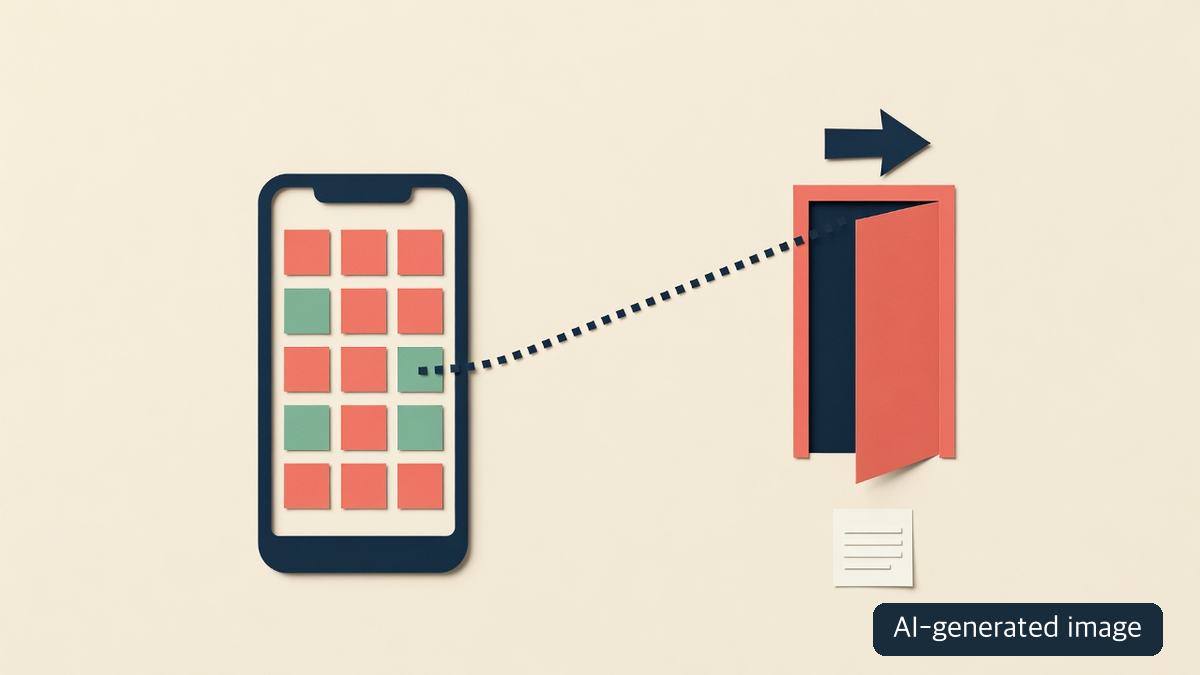
A five-part decision record
- Conversion: Does the free period roll into recurring charges, and on what exact date?
- Price: What will each charge cost, how often will it recur, and what will it cost after any discount ends?
- Consent: Where can you actively accept or refuse the later conversion? Note the conversion date on your own calendar; do not treat silence as affirmative consent.
- Exit: Before paying, locate the termination route and check whether online sign-up is paired with a phone-only or otherwise restricted exit.
- Evidence and money: Save the offer, prices, consent choices and exit conditions, then keep dated records of any request. A difficult cancellation route and entitlement to a full refund of a previous charge are separate questions.
If you have already been billed, ask the operator for the consent record, the effective cancellation date and the contractual refund conditions. A screenshot of a confusing screen does not on its own decide whether a particular trader violated the law, or how much is refundable. The shorter Korean Q&A is available at Life Mokcha on Naver.
About the Author
The Life Mokcha editorial team compared the October 6 KFTC press PDF with the full attached guideline. This is a practical reading aid for consumers, not an official legal opinion or case-specific advice. The illustrations do not depict a real subscription interface.