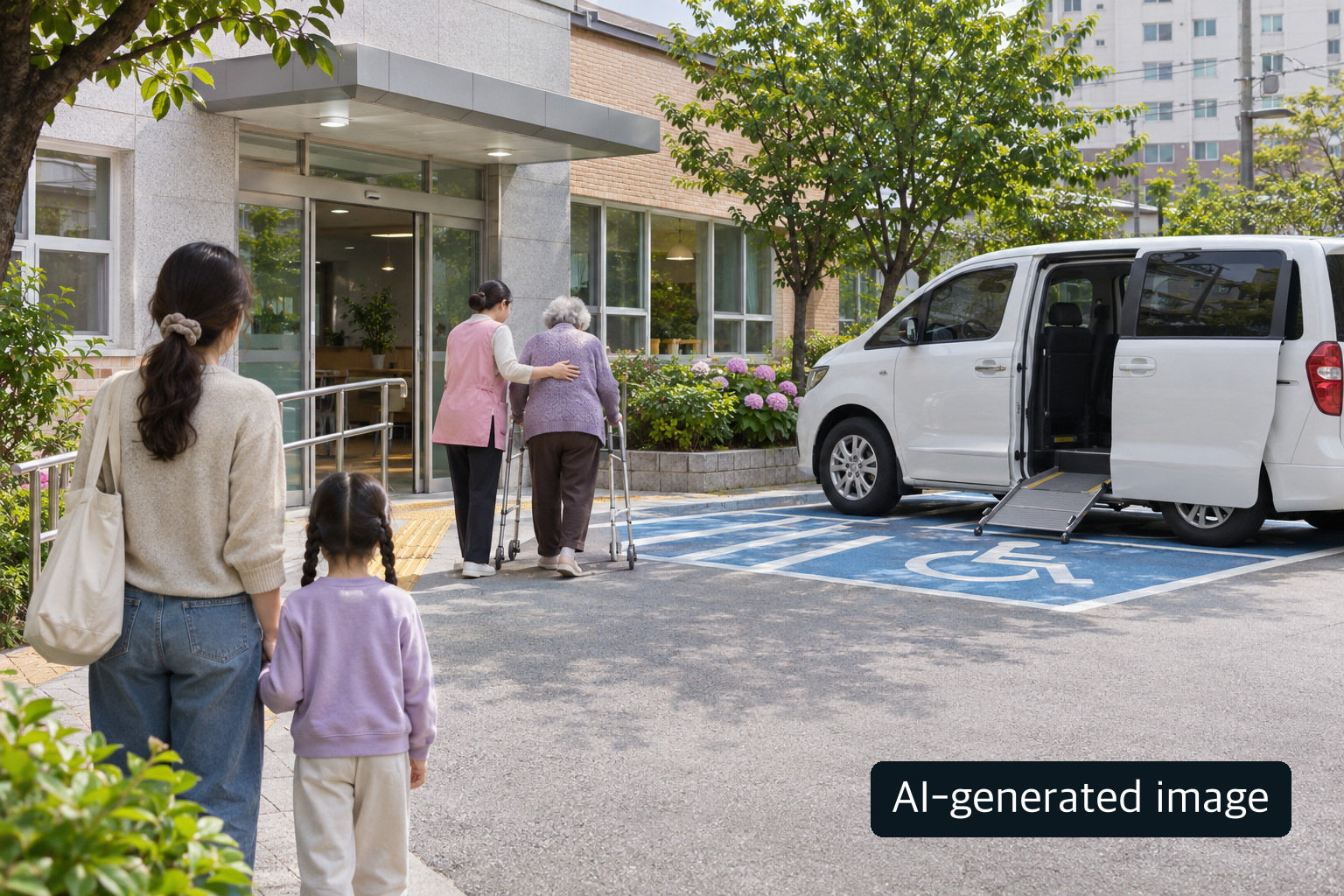
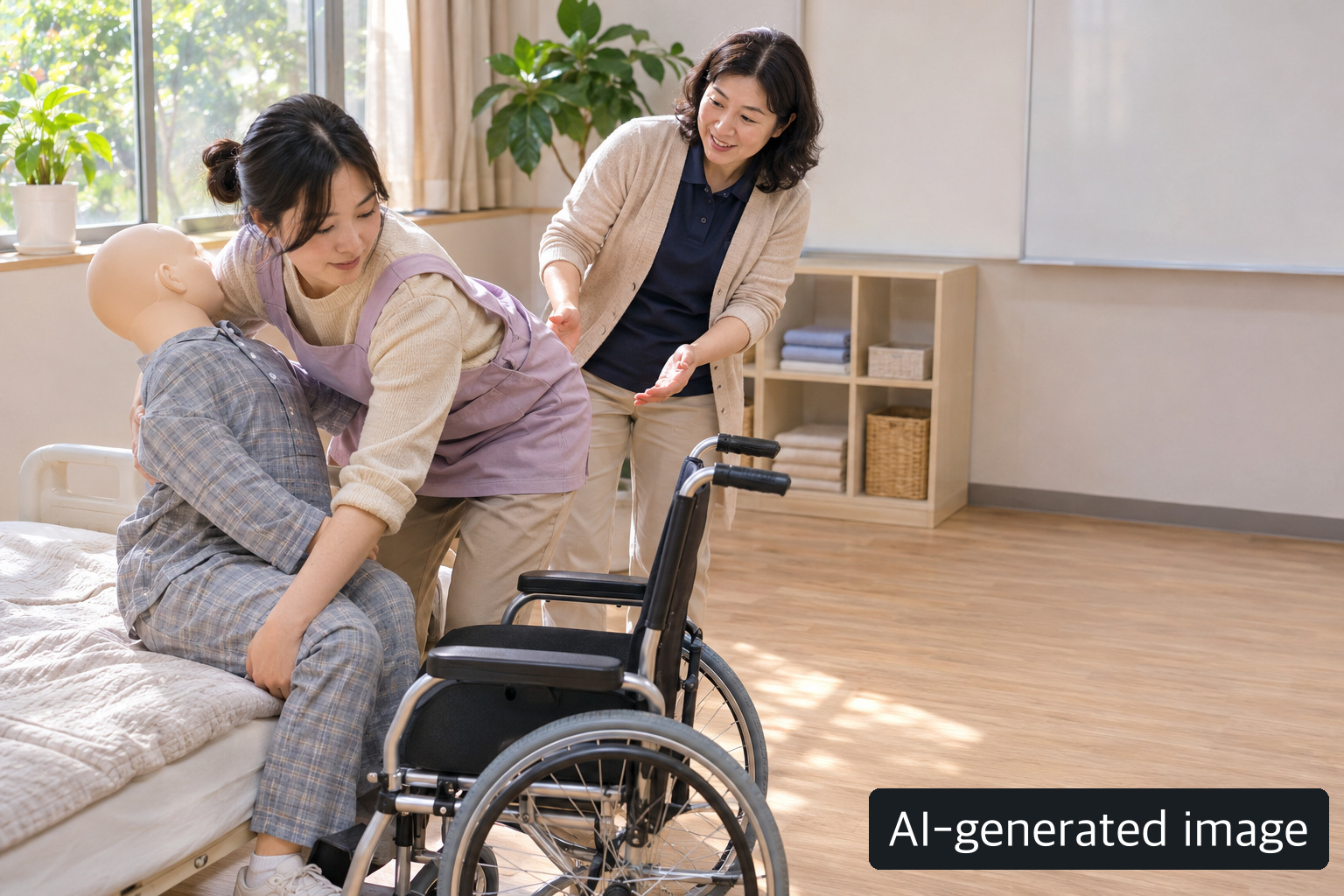
Korea's Ministry of Health and Welfare announced on November 3, 2026 that two professional associations had begun recruiting for a pilot standard training course for people who want to work as caregivers. It described the course as open to anyone interested in this work, without a separate tuition charge. The announcement does not mean there is a single nationwide class with one schedule. The Korean Nurses Association and the Korea Association of Geriatric Hospitals run their own recruitment and training, so applicants should check the current notice of the association they choose. The cover is an AI-generated illustration, not a photograph of an actual class.
What does the 16-hour course contain?
The ministry's plan divides the course into eight hours of theory and eight hours of practical training. Its five subject groups cover the caregiver's role and work, physical care and environment management, safety, infection control, and care for older people and people approaching the end of life. The attached curriculum outline names professional ethics, communication, hygiene, meals, skin and toileting support, movement, fall prevention, emergency response, infection prevention, dementia and end-of-life care among the basic content. The training provider must include the specified core material but may add material and adjust the distribution of hours within a subject. Ask the provider for its actual timetable and attendance requirements; the ministry's outline is not a personal class assignment.
The two associations have different dates
The government announcement gives a planned recruitment period of November 3–30, 2026, and explicitly warns that the closing date and education period can change with demand. It lists November 30–December 11 as the Korean Nurses Association's training period and November 16–December 11 as the Korea Association of Geriatric Hospitals' period. Do not use one association's starting date for the other. Before arranging leave from work or travel, check the live notice for the relevant course, available places, location, practical sessions, attendance rules and any changed closing date. The press release does not guarantee a seat or a particular regional venue.
Where should you apply?
The ministry directs applicants to the Korean Nurses Association or the Korea Association of Geriatric Hospitals. It lists 02-2260-2586 for the former and 02-719-5678, extension 2, for the latter. Look for the current notice specifically titled “caregiver standard training course,” and check the association and year before submitting information; other caregiver-related courses may appear on the same site. If a link arrives in a text message, navigate through the association's official website and verify the number independently rather than trusting a copied contact detail.
Is the certificate a national qualification?
No. The ministry says that people who complete the course will receive a completion certificate in the name of the association that delivered it. It is evidence of completing this pilot course, not a state-issued caregiver licence or national qualification. The announcement does not promise a job, authorize every kind of clinical procedure, or establish that all employers will treat the certificate in the same way. Actual duties depend on the employment arrangement, the institution's standards, instructions from licensed professionals and applicable law. Be wary of advertisements offering an “instant national certificate” or guaranteed employment in exchange for a fee or sensitive personal information.
The government plans to evaluate the pilot and refine the curriculum, with further provider selection planned for the following year. Neither a future provider nor its dates are fixed by this announcement. For this intake, compare the ministry's press release and original PDF with the latest notice from the association where you intend to apply.
About the Author
The Life Mokcha editorial team reviews official announcements and primary sources to explain practical information. Check the linked original sources for applicable terms and later updates.