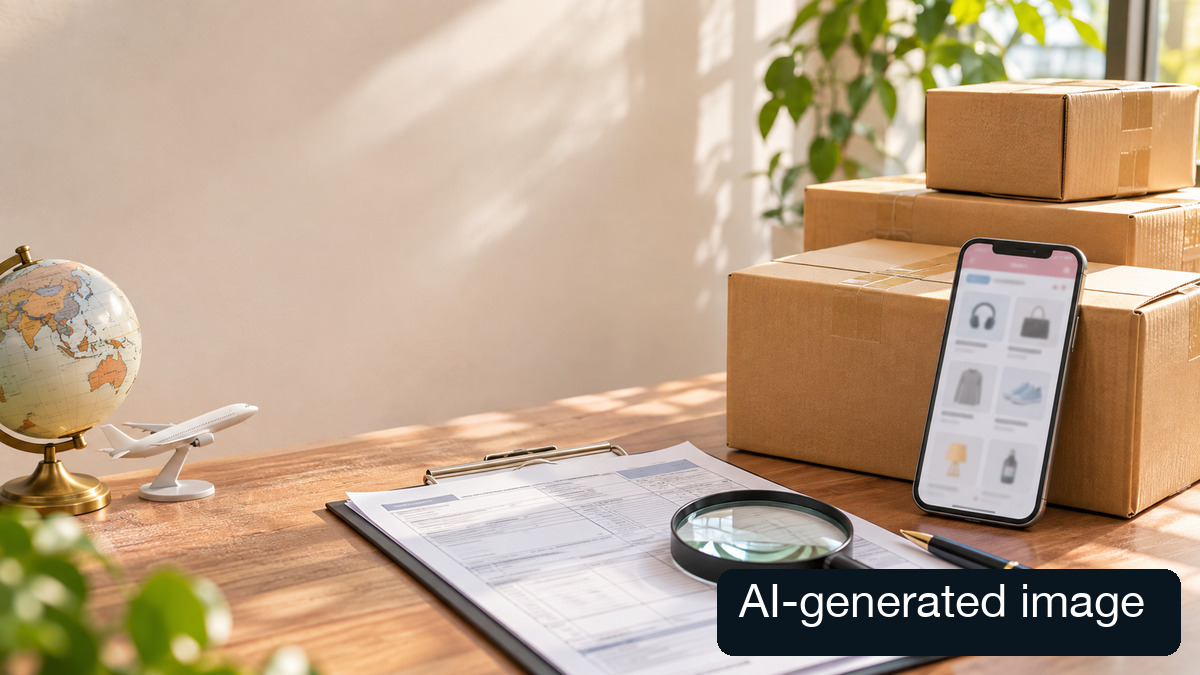
Large online sales can bring a flood of international listings. A low price or unfamiliar seller does not, by itself, prove that an item is counterfeit or illegal. Nevertheless, a buyer who encounters signs of an illicit import or online sale should know how to preserve the facts and contact the relevant authority. In its November 2, 2026 press release, the Korea Customs Service (KCS) announced an eight-week operation from November 2 through December 27 against misuse of the simplified customs process for overseas direct purchases. This is an enforcement announcement, not a ruling on any individual listing. The cover is an AI-generated concept image, not a photograph of an actual parcel, seller or inspection. The Korean Naver version provides a short reporting checklist.
What the operation targets
KCS identifies four priority types of conduct: importing goods for sale while presenting them as personal-use purchases; using another person's personal customs-clearance code without permission; smuggling illegal food, medicines or related products; and illegally importing goods that infringe intellectual-property rights, including K-brands. The release describes simplified treatment for goods recognized as personal-use purchases valued at no more than US$150, or US$200 for goods originating in the United States. The personal-use condition matters. The value figures should not be read as an unconditional tax exemption for every low-priced product, and this article cannot decide the status of a particular shipment.
The agency lists cosmetics, food and pharmaceutical products, bags, shoes, clothing, and electrical or electronic products among the main categories it will watch. These are broad product categories, not a blacklist of all imported goods within them. A category name, discount percentage or product image is not enough to establish counterfeit status, health risk or a customs offence. When a listing raises concern, distinguish what the page actually says from the conclusion you suspect. That distinction makes a report more useful and avoids publicly accusing a seller on uncertain evidence.
KCS also says it will work with major domestic and international e-commerce companies to monitor the online circulation of unlawfully imported goods. Where harmful food or pharmaceutical products or suspected IP-infringing items are found, it plans to request the removal of sale postings and a halt to the seller's activity. This describes an enforcement and platform-cooperation plan. It does not promise that every customer report will cause immediate removal, nor does the disappearance of a listing alone prove a final legal finding.
Information worth retaining
Before buying, check the listing URL, seller identity, product claims, advertised price, shipping terms and return information. If you have ordered, retain the order number, payment and delivery records, and photos of the item and its labeling where relevant. If you suspect someone used your customs-clearance code without authorization, keep the notices and transaction details that show why the activity is unfamiliar. These are practical ways to describe what happened; the press release does not prescribe them as a mandatory document checklist for every report. Do not send extra personal identifiers to an unverified seller or post a customs-clearance code in a public comment.
For an immediate purchasing decision, a general crackdown announcement cannot replace product-specific information. Check the current notice from the seller, the relevant platform and the customs authority where applicable. If the information remains unclear, postpone treating the purchase as verified. The operation's dates do not certify that goods sold before, during or after the period are safe or unsafe. Nor do they set a deadline after which suspected illicit trade cannot be reported.
The official reporting route
KCS asks people who discover suspected illegal imports or online unlawful distribution using the direct-purchase system to use its website's Public Participation → Reporting → Smuggling Report route, or call 125 without an area code and select 10. A caller should follow the menu rather than assume that dialing 125 alone reaches the same reporting desk. Explain which advertisements, orders, notices or physical labels you personally saw, and label anything not verified as a suspicion. The responsible authority can then assess the information under its procedures.
The release's examples of earlier enforcement cases come with an important caution: the alleged conduct described there has not been established as fact by a court judgment. Those examples should not be applied to an unrelated seller as though they were findings about that seller. Before reporting or sharing a claim, check the official release and the latest KCS guidance for changes to the route or details.
About the Author
The Life Mokcha editorial team reviews official announcements and primary sources to explain practical information. Check the linked original sources for applicable terms and later updates.