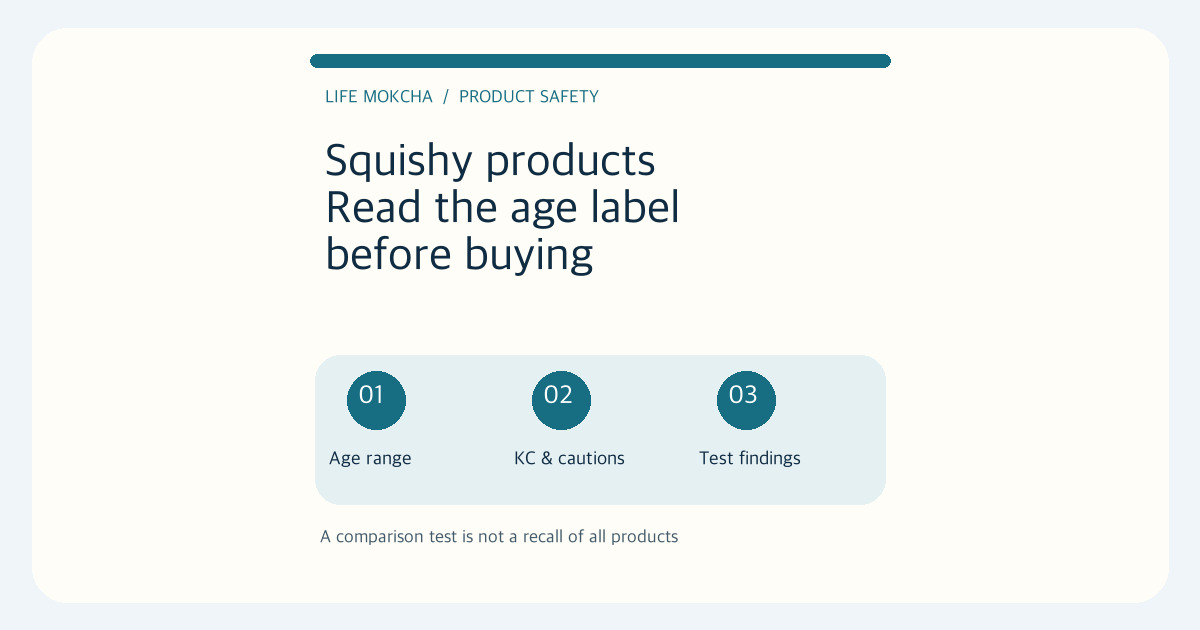
A headline about “squishy toys” does not mean every squishy item in a Korean household was tested or recalled. Seoul's 31 August 2026 release describes a comparison test of selected products labeled for ages 14 and up. The useful household question is whether the item's stated age range fits the person who will actually use it.
Checked 5 October 2026. The graphics below are original editorial diagrams, not photos of the products or screenshots of a government service.
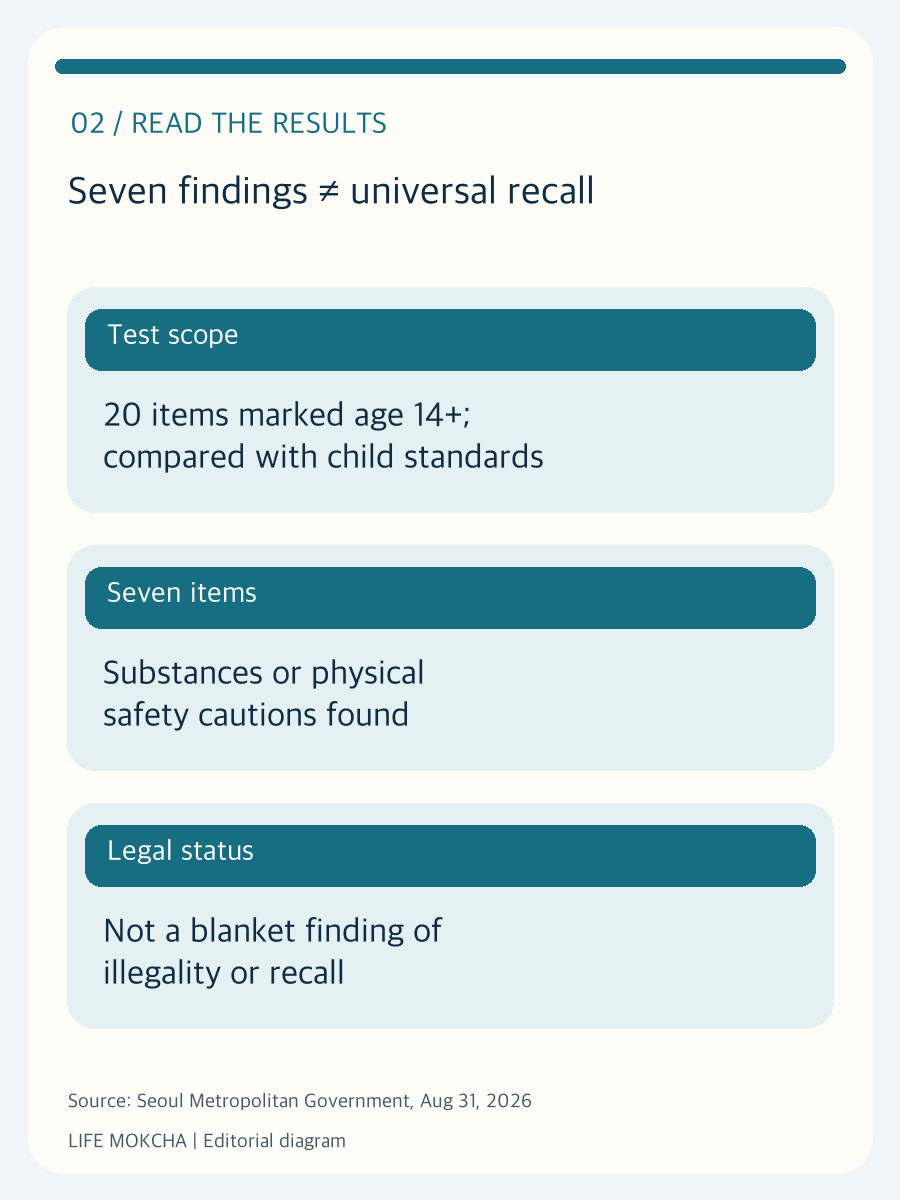
What the 20 and the seven count
The city sampled 20 age-14-plus items sold through overseas online platforms and Korean stationery shops: 13 tactile items such as squishy products or wax-coated balls, three party items, two keychains, a sticker, and an acrylic marker. It compared them against selected children's-product test items and benchmark values because children might use them. It did not test “20 squishy toys,” nor does this sample describe every similar product on sale.
Seven items drew substance-related or physical-safety cautions: five tactile items, one sticker and one keycap keychain. The release reports plasticizers in surfaces or decorations of some tactile products; separate leaching tests identified formaldehyde, methanol or boron in certain samples. One wax-ball sample was checked for preservatives, and a small battery came free from the keychain during a pull test. These are different tests on different samples, not a combined chemical profile for every item.
The city explicitly says the exercise was not a legal determination that those age-14-plus products are children's products or that they passed or failed a statutory conformity test. “Seven findings” therefore does not mean seven legal recalls, and the city did not announce a universal recall of all squishy products. Seoul said it asked overseas platforms to stop selling certain products that exceeded comparison benchmarks; an individual listing's current sale or recall status needs separate, current verification.
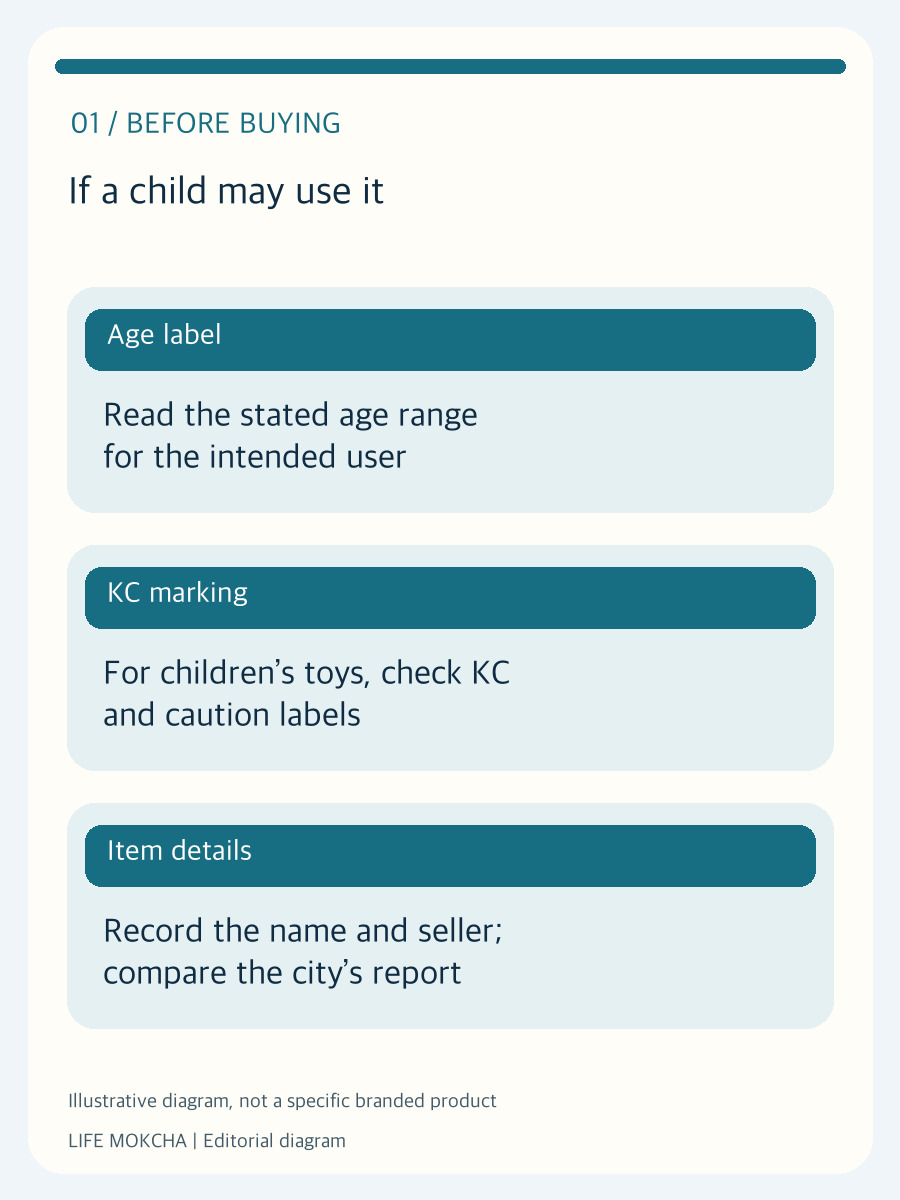
A focused check before a child uses an item
- Read the age marking. A product labeled 14+ should not be mistaken for a children's toy intended for a child aged 13 or under. Compare the label with the intended user, not just the product's appearance.
- For a children's toy, check the applicable KC marking and cautions. Seoul advises caregivers to examine age and safety labeling. Lack of a KC mark on an age-14-plus item does not by itself identify that item as one of the sampled products or establish an illegal sale.
- Keep the exact item details. Record the product name, seller, packaging and order details; compare them against the city's published material. Its attachment often gives generic product names and purchase channels, not enough model or lot information to prove that a similar-looking item is the same tested product.
Seoul describes its sample as age-14-plus products outside the mandatory KC certification regime for children's products. That context matters: neither a KC logo nor the absence of one can substitute for identifying the exact item and interpreting this particular test.
If a young child might put the item in their mouth or access a detachable part or battery, remove an age-inappropriate item from their reach and retain its packaging. If ingestion or symptoms are suspected, give the product information to a medical professional. This article does not assess an individual's exposure or offer a diagnosis.
The short Korean-language checklist on Naver covers the purchase steps. This edition explains what Seoul tested and why the numbers should not be promoted into a blanket recall claim.
About the Author
The Life Mokcha editorial team distinguishes a limited consumer-information comparison from formal noncompliance or recall decisions. Check the responsible authority and seller for the current status of a specific item.