The trip decision first: The Ministry of Oceans and Fisheries (MOF) says a reconstructed, life-size Dokdo sea lion skeleton will be shown in the second-floor waiting hall of Seoul Station, October 19–25, 2026. The reviewed announcement does not specify daily display hours, a ticket price, or whether a reservation is required. Check a current organizer or on-site notice before making a dedicated trip.
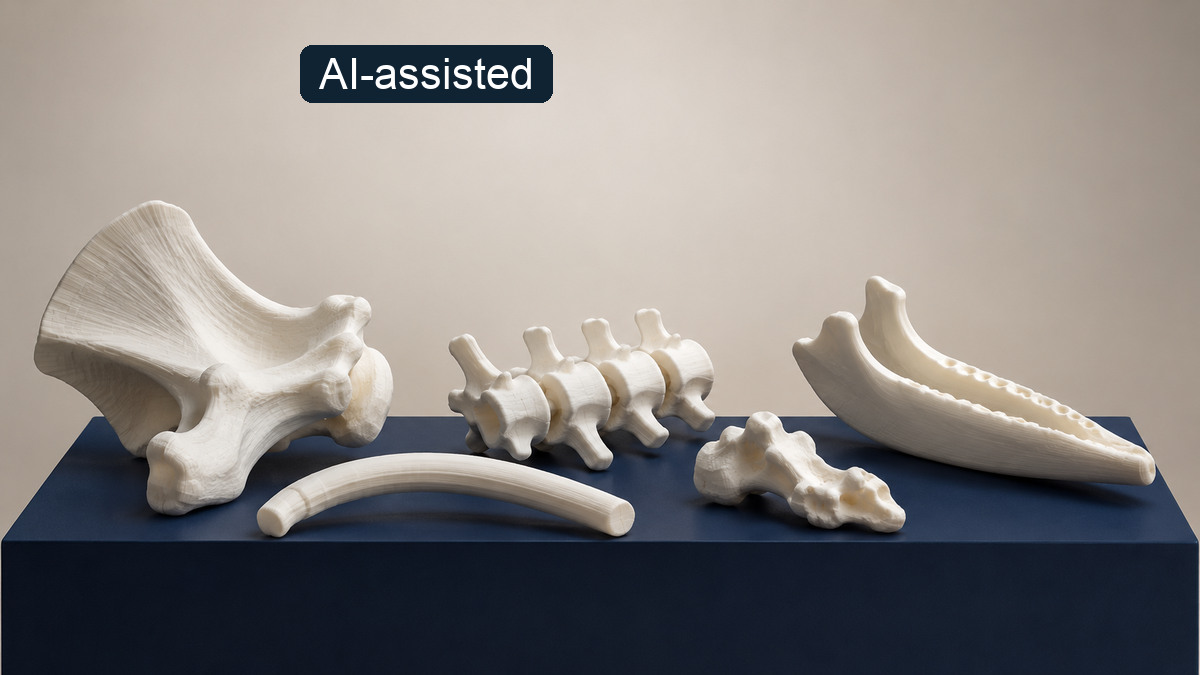
The cover arranges white, bone-like printed model pieces in an AI-generated studio image. Do not identify the pictured pieces as the skeleton installed at Seoul Station or the 41 bones held by the institute. MOF's release is the source for the exhibit details.
A visitor's evidence table
| Question | What the announcement establishes | What still needs checking |
|---|---|---|
| Where? | Seoul Station, second-floor waiting hall | Exact position inside the hall and any access restrictions |
| When? | October 19 (Monday) through October 25 (Sunday), 2026 | Daily opening/closing times and any last-day change |
| What? | Life-size reconstructed skeleton and a video about the animal's history and the digital reconstruction | Which physical parts, if any, are originals on display |
| Price or booking? | Neither stated in the examined release | Admission, booking and any crowd-control rules |
The organizer also operates SeaQrium in Seocheon, whose general visitor guide lists 09:30–18:00 and a Monday closure. Those are not the hours or closure rules for this Seoul Station display. In fact, the station display's announced period begins on a Monday. Do not transfer the museum's operating rules to a separate pop-up venue.
Forty-one real bones are the evidence base, not a complete original skeleton
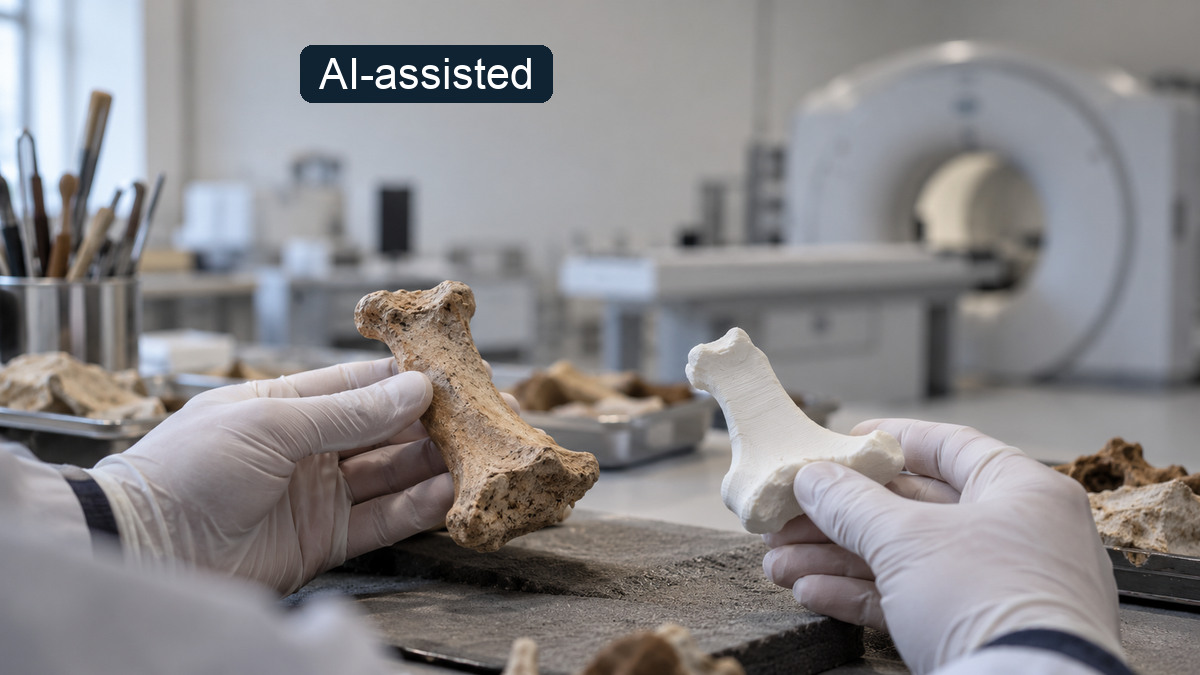
This AI-generated comparison pairs a bone-like object with a printed model. The pictured objects and hands do not document the institute's specimens or reconstruction work; the sequence below comes from MOF's release.
The ministry says the National Marine Biodiversity Institute of Korea used 41 actual Dokdo sea lion bones found at Gajaegul Cave on Ulleungdo in September 2020 and held in its collection. Researchers CT-scanned the bones, made three-dimensional digital models, and used 3D printing to realize a skeleton at life size. For parts absent from the bones, they consulted anatomical material from the California sea lion, another species in the same genus.
This gives readers three separate categories:
- Original remains: the 41 actual bones in the institute's collection, which furnished source evidence for the reconstruction.
- Digital interpretation: CT data and a 3D model supplemented where the original evidence is missing.
- Physical exhibit: a life-size printed reconstruction, not an intact fossilized skeleton consisting entirely of original bones.
The release does not say whether the 41 source bones themselves are brought to Seoul Station for separate display, or precisely identify each printed element's original-versus-comparative basis. It uses “actual bones,” not an independently verified fossil classification. Look for the exhibit's labels rather than calling the entire object “41 fossils” or describing a particular displayed piece as authentic.
Three things to look for while there
- Which part came from evidence? See whether the panels distinguish surviving material from parts informed by a related species.
- How was it made? The announced video should cover the animal's history and the digital reconstruction; look for the CT → model → printing sequence.
- What does “life-size” mean here? It describes the scale of the resulting model, not proof that every bone shown was retrieved intact.
This AI-generated coastline does not establish the geography of Ulleungdo or Dokdo; MOF's release supplies the habitat claims for those places.
According to MOF, Dokdo sea lions once lived around Korea, Japan and Russia, with Ulleungdo and Dokdo important breeding and habitat areas. Their numbers fell after intense capture in the early twentieth century; the ministry says the IUCN classified the species as Extinct in 1994.
Don't confuse the Seoul display with SeaQrium's later exhibition
The institute also plans Return: Dokdo Sea Lion at SeaQrium from November 2026 to August 2027. That is a separate venue and an announced month range, not a confirmed November opening day, exact daily timetable, or advance-booking rule. Recheck the institute's exhibition calendar for that later visit.
Bottom line: If you are already passing through Seoul Station during the announced week, look for the second-floor waiting hall and its current signs. If this is your sole reason for travel, resolve the daily hours, fee and reservation questions with the operator before leaving. A short Korean-language visit summary is available on Life Mokcha's Naver blog.
About the Author
Life Mokcha editor Mokchajigi separates announced dates and venues from unannounced visitor logistics, and original scientific material from a printed reconstruction.
References
- Ministry of Oceans and Fisheries, press release on the Dokdo sea lion reconstruction, October 16, 2026 (Korean) — date, venue, 41 bones, CT/model/printing and planned SeaQrium exhibition. Policy Briefing republication with attached PDF is the same source, not an independent corroboration.
- National Marine Biodiversity Institute of Korea, current special-exhibition list — no Seoul Station hours or fee found at review. Its SeaQrium visitor guide concerns a different venue.