
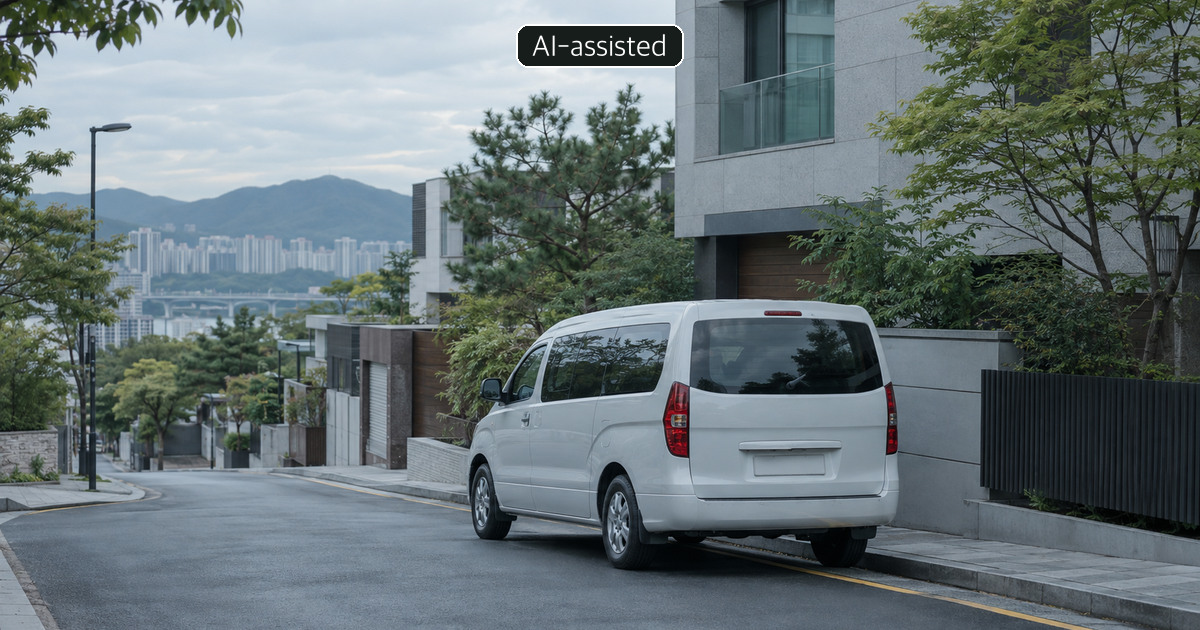
“Real-time ambulance GPS transmission” sounds like a way to watch a loved one's vehicle on a phone. That is not what the Ministry of Health and Welfare announced. Its October 14, 2026 release and appendix describe operators sending trip records to an ambulance record-management system for oversight. They do not announce a live location map for patients or relatives. This article checked the original three-page attachment on October 16. Its images are conceptual, not photographs of a specific vehicle or a real system; the images are AI-made conceptual photographs.
What took effect, and who is covered?
The ministry says GPS-based real-time transmission of driving information began October 14, 2026, under enforcement rules promulgated on July 13. The release explicitly identifies emergency-patient transport business operators and the ambulance-operating social welfare corporation Daehan Inmyeong Gujodan (대한인명구조단). Do not expand that list to every social welfare corporation or claim the release imposed the same new requirement on every public 119 ambulance.
Information collected by each vehicle's trip-recording device goes to AiR, the ambulance record-management system run by the National Emergency Medical Center. The stated objective is to make improper use—including private trips unrelated to patient transport—easier for authorities to inspect. Previously, stored GPS tracks and documents were compared after the trip, which the ministry said limited oversight.
Which records are captured automatically?

AiR collects vehicle position, route and driving time. The appendix says linked GPS data on starting and ending locations and the travel route, along with departure and arrival times, can generate a trip record automatically. The operator can then enter trip purpose and accumulated mileage to maintain the vehicle log. A recorded route does not itself establish that a trip was medically appropriate; human and institutional review still matter.
The ministry says these data will support checks on whether trips are appropriate and assist local-government inspections. That is operator and regulator-side reporting. The release does not demonstrate an app for passengers, a shareable family map, a public vehicle locator, or an arrival-time estimate. Readers should not mistake the real-time delivery of records to AiR for a real-time service to consumers.
Two proposed enhancements are not live features

For now, the ministry describes collection and accumulation of driving information. A system function to flag suspected abnormal trips to the competent authority is planned for 2027. A future flag would prompt scrutiny; it would not by itself prove a violation. Calling this a completed October 2026 automatic fraud-detection service would collapse a future plan into the current rule.
There is also a distinction between an existing insurance duty and a future integration. The ministry says all ambulances must already carry liability and comprehensive insurance. It plans to consult insurers and the Korea Insurance Development Institute about linking coverage information so AiR can better check ongoing enrollment. It did not say a live continuous insurance lookup launched on October 14.
For a real private-transport journey, ask the provider about its own booking, contact and progress-update process. This government measure concerns the supervision of trips; it is not a consumer tracking launch.
You can also read the original Korean article on Naver Blog.
About the Author
Life Mokcha reads primary government documents carefully, separating operative rules from planned features and practical reader expectations.