
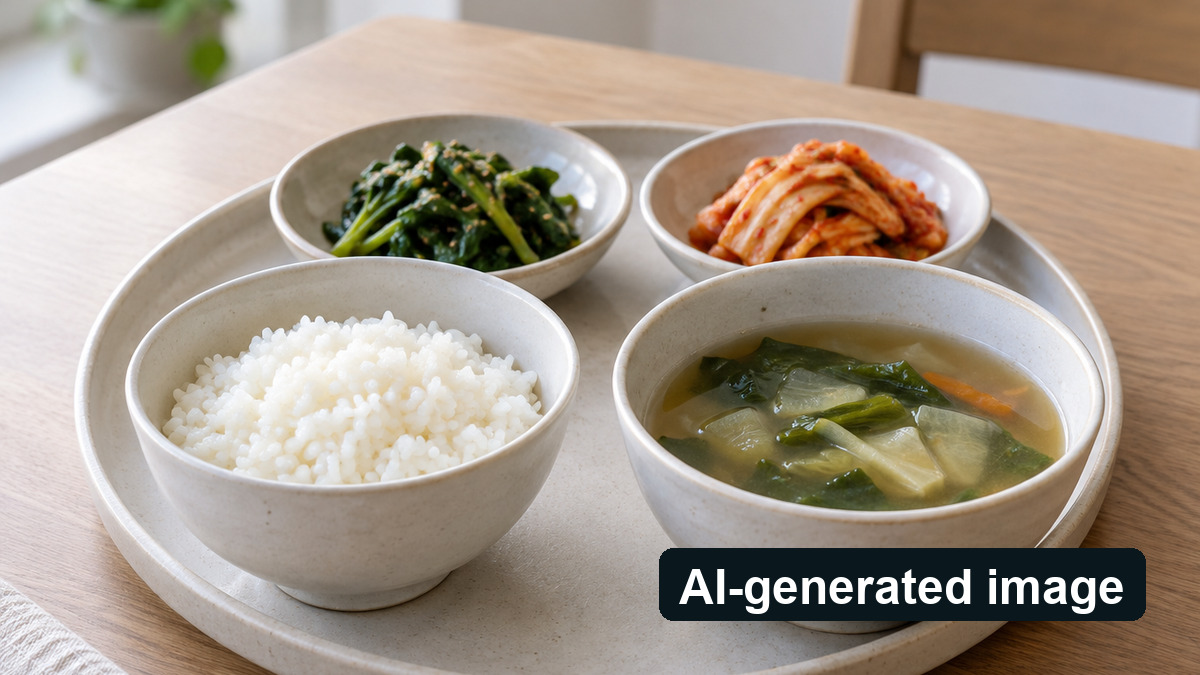
Checked October 7, 2026 (Korea time). On October 6, the Ministry of Health and Welfare announced and distributed meal-management criteria for long-term care institutions. Its six-page original Korean PDF contains both the press note and the full attached criteria. The most useful distinction for families is between what the criteria say institutions should do and practical questions you can ask. This is not a report on any particular facility or a newly verified national disclosure portal.
Which services are covered?
Article 3 covers providers of day/night care, short-term care, and residential facility benefits under Korea's long-term care insurance law. It does not say that every home-visit care service is covered. Check your family member's actual benefit/service type rather than assuming the rule extends to all elder care.
The ministry describes meal-ingredient fees (식사재료비) as an out-of-pocket, non-covered charge paid by users. Under Article 4(5) of the attached management criteria, the institution head is to disclose how those fees are used to residents and guardians. Article 4(6) says the fee should in principle be used within three months of the month in which it was collected. The three months are not a guaranteed disclosure frequency or an automatic refund deadline. The reviewed PDF does not prescribe a single app, public dashboard, standard receipt package or universal access channel.
A four-part conversation with the provider
These are editorial prompts for a conversation, not a statutory form or a promise of access to a particular record.
- Scope and access: “Which covered benefit does this facility provide? How can we see the meal-ingredient fee use details, and what period does the available statement cover?” Ask the provider directly; the release does not verify that your facility has put a statement online.
- The menu versus the meal: “Where is the menu posted, and how are substitutions recorded?” Article 5(1)–(3) calls for a dietitian's balanced menu (the Korean text says at least four side dishes per meal), posting the menu inside the facility, and recording a substitute in the food-service log when the menu cannot be followed. The substitution should stay within the same food group and cooking method. The text does not establish that every guardian must receive a complete copy of the log.
- No in-house dietitian: “How is guidance from the social-welfare food-service support center being arranged?” Articles 4(2) and 5(2) cover a facility without a dietitian. If the institution applied to register but the center's circumstances delay registration, the registration provision applies from completion of registration. Do not label a facility noncompliant solely because registration has not yet finished.
- An individual meal: “Have we accurately communicated chewing or swallowing difficulties, conditions, food allergies and preferences?” Article 5(4) says these should be considered in appropriate meals. A posted menu cannot by itself establish that a particular person can safely eat it; discuss medical dietary adjustments with the person's clinician where appropriate.

A management criterion is not an automatic penalty
The attachment also addresses food and kitchen hygiene and inspection records (Article 6). Outsourced food service is not categorically prohibited; Articles 4(3) and 7–9 distinguish eligible contracts, preparation-location exceptions and reporting procedures. A photograph of a meal cannot prove fee accounting or rule compliance.
The ministry's press note separately points to existing hygiene-operation principles in the Enforcement Rule of the Welfare of Senior Citizens Act. Do not collapse that existing legal framework into the newly distributed management criteria. The reviewed PDF does not establish a new fine amount, an automatic penalty for a missing disclosure, an automatic refund to the family, or that any specific provider is in breach. Ask for the facility's explanation and document the dates and substance of any unresolved concern; individual compliance needs competent fact-finding.
For a short Korean question list, see the Life Mokcha Naver guide.
About the Author
The Life Mokcha editorial team checked the ministry's October 6 release against Articles 3–9 of the original six-page Korean PDF, keeping existing law, distributed management criteria and optional family questions separate.