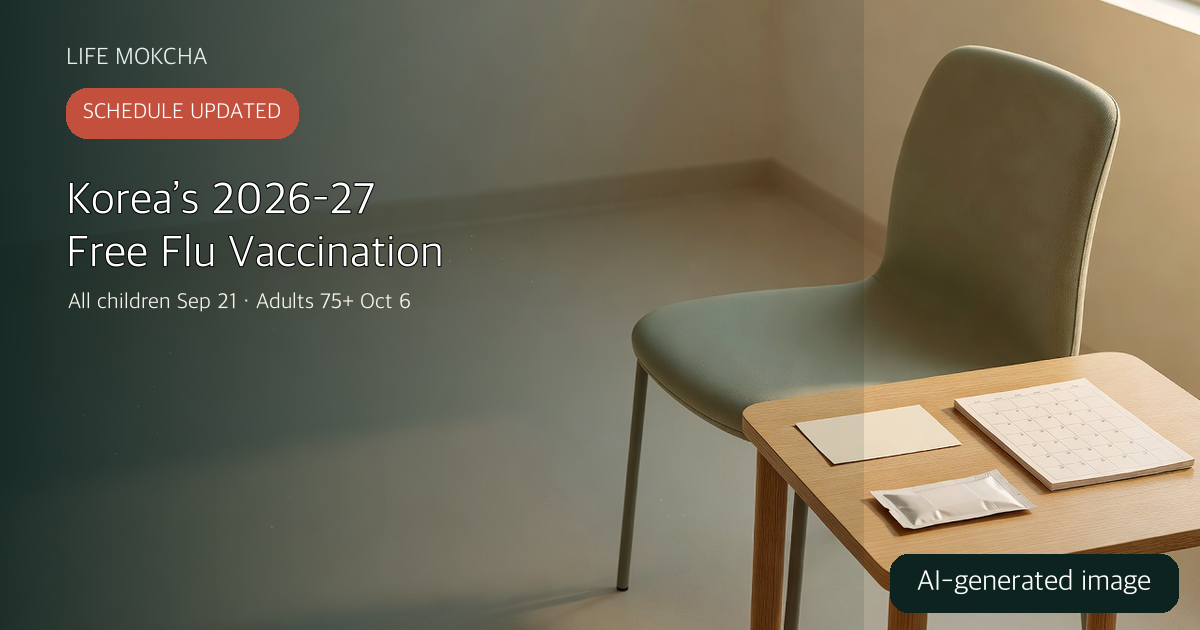
On September 16, 2026, the Korea Disease Control and Prevention Agency (KDCA) moved up several start dates for the 2026–27 national influenza vaccination programme in response to an unusually early rise in influenza activity. The one-dose child group moved from September 28 to September 21, while the 75+ group moved from October 12 to October 6.
Schedule update: All eligible children and pregnant people may start on September 21. Adults aged 75+ start October 6, ages 70–74 start October 12, and ages 65–69 start October 15. This article was rechecked on September 21 against KDCA’s September 16 revision.
The child eligibility range has also expanded through age 14. Children now share the same programme start date, but they do not necessarily need the same number of doses. Date of birth and prior influenza-vaccination history still matter.
The images in this article are explanatory AI-generated visuals. They do not depict an actual clinic, vaccination event, vaccine product, or KDCA campaign photograph. The red “Schedule Updated” labels flag the changed dates.
Revised start dates at a glance
The common programme end date is April 30, 2027.
| Free-vaccination group | Eligibility basis | Revised start | Previous notice |
|---|---|---|---|
| Children needing two doses | Ages 6 months to under 9 with no prior influenza vaccination, or only one prior dose | September 21, 2026 | No change |
| Children needing one dose | Other eligible children born January 1, 2012–August 31, 2026 | September 21, 2026 | September 28 |
| Pregnant people | National programme eligibility for pregnancy | September 21, 2026 | No change |
| Age 75+ | Born on or before December 31, 1951 | October 6, 2026 | October 12 |
| Ages 70–74 | Born January 1, 1952–December 31, 1956 | October 12, 2026 | October 15 |
| Ages 65–69 | Born January 1, 1957–December 31, 1961 | October 15, 2026 | October 19 |
The full child eligibility range is January 1, 2012–August 31, 2026. The older-adult programme covers people born on or before December 31, 1961.
Find your date in three steps
- For a child, first check whether the date of birth falls inside the programme range.
- For a child aged 6 months to under 9, check whether the child has received zero or one prior influenza dose.
- For an adult aged 65+, use the registered year of birth to identify the 75+, 70–74, or 65–69 band.
Do not decide the child’s dose count from age alone. Ask the clinic to check the previous influenza-vaccination record.
Children: all start September 21
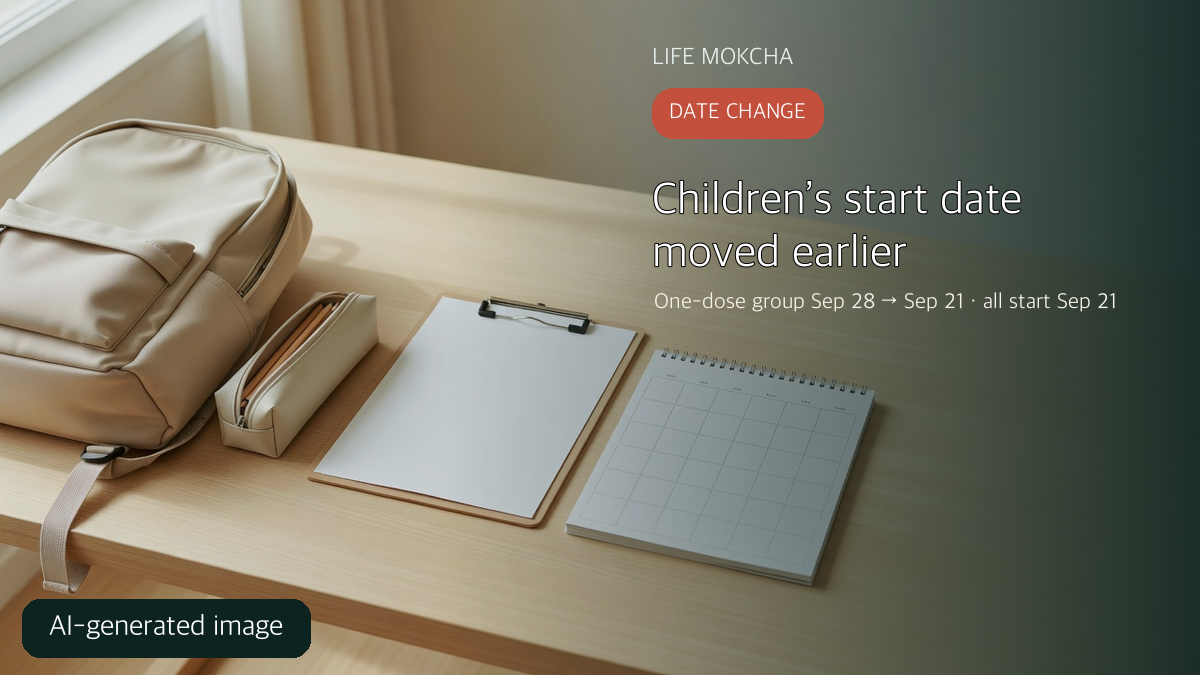
This is an AI-generated explanatory image, not a photograph of a real child or clinic.
Children who need two doses still begin on September 21. The one-dose group has been moved forward by one week from September 28 to September 21, so all eligible children now share the same programme start date.
KDCA’s two-dose category requires both of the following:
- the child is aged 6 months to under 9; and
- the child has never received an influenza vaccine, or has received only one prior dose.
Other eligible children born from January 1, 2012 through August 31, 2026 fall under the one-dose schedule. The phrase “under age 9” should not be used on its own; vaccination history must be checked as well.
Pregnancy: starts September 21
The national influenza vaccination programme for pregnant people still runs from September 21 through April 30, 2027. This article summarises the programme schedule only. Individual health conditions and vaccination timing should be discussed with a clinician.
Adults 65+: age bands moved earlier
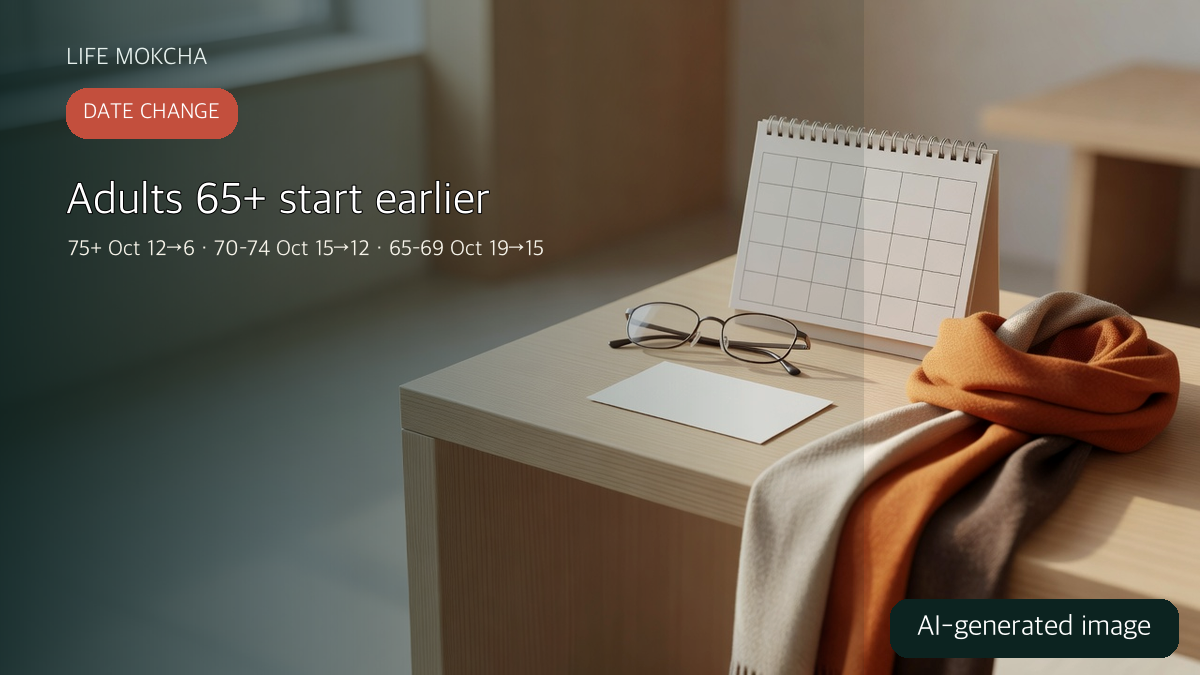
This is an AI-generated explanatory image, not a photograph of a real older adult or clinic.
- Age 75+: October 12 → October 6
- Ages 70–74: October 15 → October 12
- Ages 65–69: October 19 → October 15
According to KDCA, immunocompromised older adults may consult a clinician and receive the influenza vaccine from October 6 regardless of the age-band schedule. Long-term care hospitals and facilities may begin as soon as vaccine supply is ready.
The September 16 revision concerns the influenza programme. Check the latest separate notice for the COVID-19 vaccination schedule.
How to find a participating clinic
Nationally supported vaccination is available at public health centres and participating clinics regardless of residential address.
- Use the KDCA vaccination portal to find a participating provider.
- Confirm programme eligibility and the revised start date.
- Before visiting, ask about opening hours, vaccine availability, and whether vaccination is available that day.
- For a child, ask the provider to verify prior influenza-vaccination history.
People outside the national programme may obtain paid vaccination from a local provider. Some local governments operate additional support programmes, so check with the relevant public health centre.
What the vaccine can and cannot do
The 2026–27 national programme uses a trivalent vaccine containing all strains recommended by the World Health Organization for the season.
Vaccination does not prevent every infection. Protective antibodies generally take about two weeks to develop, and effectiveness varies with the match between the vaccine and circulating viruses and with individual immune response. KDCA also emphasises reduction of severe disease and death.
Common reactions after vaccination
KDCA’s FAQ identifies redness and pain at the injection site as the most common reactions, usually resolving within one or two days. Seek medical advice for unexpected or severe symptoms.
Before-you-go checklist
- [ ] I checked the date-of-birth or age eligibility rule.
- [ ] For a child, I will verify prior influenza-vaccination history.
- [ ] The revised start date for this group has arrived.
- [ ] I checked the participating provider on the KDCA portal.
- [ ] I asked about opening hours and vaccine availability.
- [ ] I am ready to discuss relevant health conditions with a clinician.
Key dates
- All eligible children and pregnant people: September 21
- Age 75+: October 6
- Ages 70–74: October 12
- Ages 65–69: October 15
- Programme end: April 30, 2027
This article is a schedule-checking guide, not individual medical advice. Confirm personal eligibility and clinical suitability with a healthcare professional.
A shorter Korean image-led summary is available on Life Mokcha’s Naver Blog.
About the Author
The Life Mokcha editor checks current government and public-agency notices at the source and turns them into practical schedules and eligibility guides. Public-health programme information is kept separate from individual clinical advice.