Heritage On Stage is a contest for performance ideas, not a booking page for a show. The Korea Heritage Service published notice 2026-0585 on October 29. Its linked Naver Form still displayed a message saying the survey period had not begun when checked on October 30, 2026. The announced submission window opens November 9 at 9:00 a.m. and closes November 18 at 5:00 p.m. Korea time. Do not treat the publication of the notice as the opening of entries.
Who can enter, and what kind of performance?
The official contest document welcomes any South Korean national, entering individually or as a group. This is a creative idea for a regularly staged performance of about 80 minutes, based on designated national intangible heritage in traditional performance/arts and ritual/ceremonial fields. Attachment 1 lists 73 designated items: 52 in performance and arts, 21 in rites and ceremonies. The proposal must draw on at least three different items from the specified fields.
The items should work together in one theme and narrative. The notice discourages an omnibus sequence that merely presents one item after another with no story. If you outline where each item serves the beginning, development and ending, you can test whether your concept hangs together. That outline is a practical writing aid, not an additional official judging criterion.
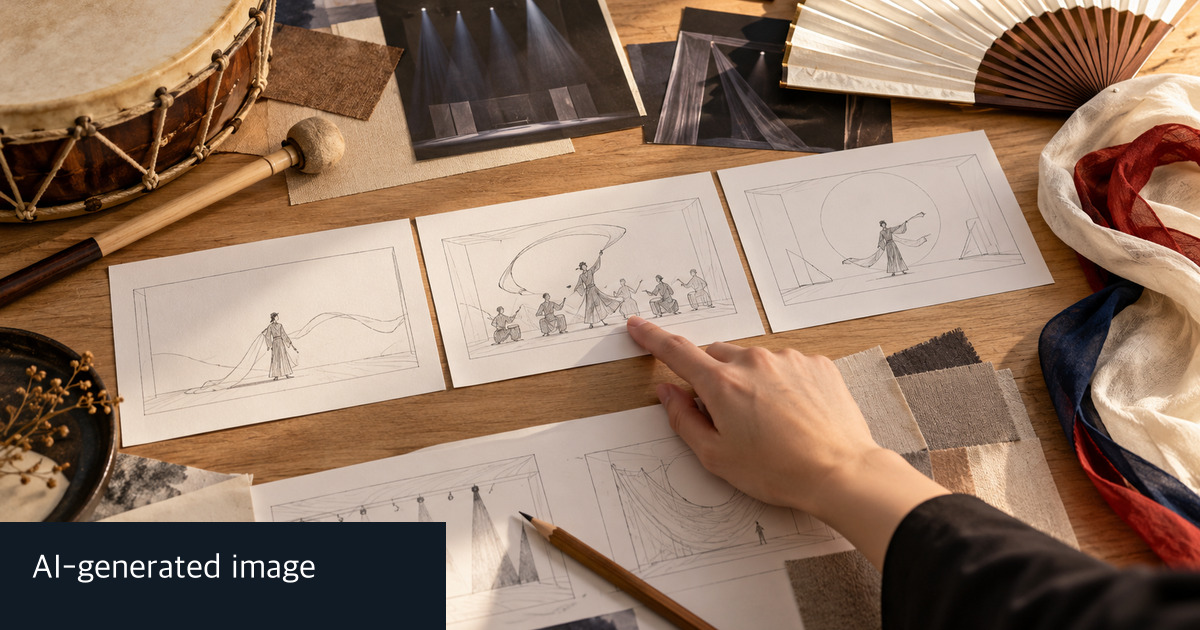
Use the attached form as a preparation checklist
Attachment 2 of the notice PDF shows a reference application. It asks for an idea title, purpose, expected duration, theater size, cast size, intended audience, story, chosen heritage items and detailed content. The story field says 500 characters or fewer and the detail field 1,500 characters or fewer. The approximately 80-minute stage duration is a separate condition; it is not the length of the written entry. Check how the live form presents these fields once it opens rather than assuming the PDF itself is the submission channel.
Previously presented or performed material may be proposed if reworked, but the applicant must disclose the performance history and explain the changes. Substantially identical content and format will not count; merely repeating a designated item's established form or an ensemble's annual program may also be rejected. If the proposal incorporates another person's literary, video or musical work, check the necessary assignment or permission. An unclear source or plagiarism can lead to cancellation of an award.
Two deadlines, two different actions
| Action | Announced timing and route |
|---|---|
| Submit the proposal | November 9, 9:00 a.m. to November 18, 5:00 p.m. via the Naver Form linked in the specific Sotong24 notice |
| Send questions | By November 18, 10:00 a.m. to [email protected] |
Sending a question by email is not an entry. Nor does the paper reference form in the PDF replace the linked online submission. The Sotong24 page asks questioners to include a mobile number at which a reply can be received. As of the October 30 check, the Naver Form was outside its response period; verify its actual state and instructions after the scheduled opening. A completed-submission screen or receipt-number format has not yet been verified and should not be promised.
How judging and awards are described
A planned November document review worth 50 points covers project fit (10), artistic merit (30) and feasibility (10). The notice says that three entries move on to a planned November–December public vote worth 50 points, calculated from their share of the vote. The two scores determine the final ranking. Passing the paper review does not itself confer an award.
The announced prizes total KRW 2 million: one top award of KRW 1 million and two awards of KRW 500,000 each. The committee may leave a category without an award if entries do not meet the criteria, and the scale or details may change. Finalists must agree to their proposal being disclosed for online public voting and may be asked for a one-line introduction and representative image. The notice also requires winners to agree to the agency's use of their proposal's intellectual-property rights and derivative-work rights for the regularly staged production. Read the official terms before submitting, especially if your plan uses third-party work.
A useful final check separates the three or more named heritage items, a coherent story and both text limits, prior-performance history and rights, and whether the actual form is open on or after November 9. None of these is established just by seeing a link on a published notice.
Korean companion on Naver
About the Author
Life Mokcha's editorial team checks the original public notice to distinguish eligibility, dates and submission routes. Check the live form and agency updates before applying.