
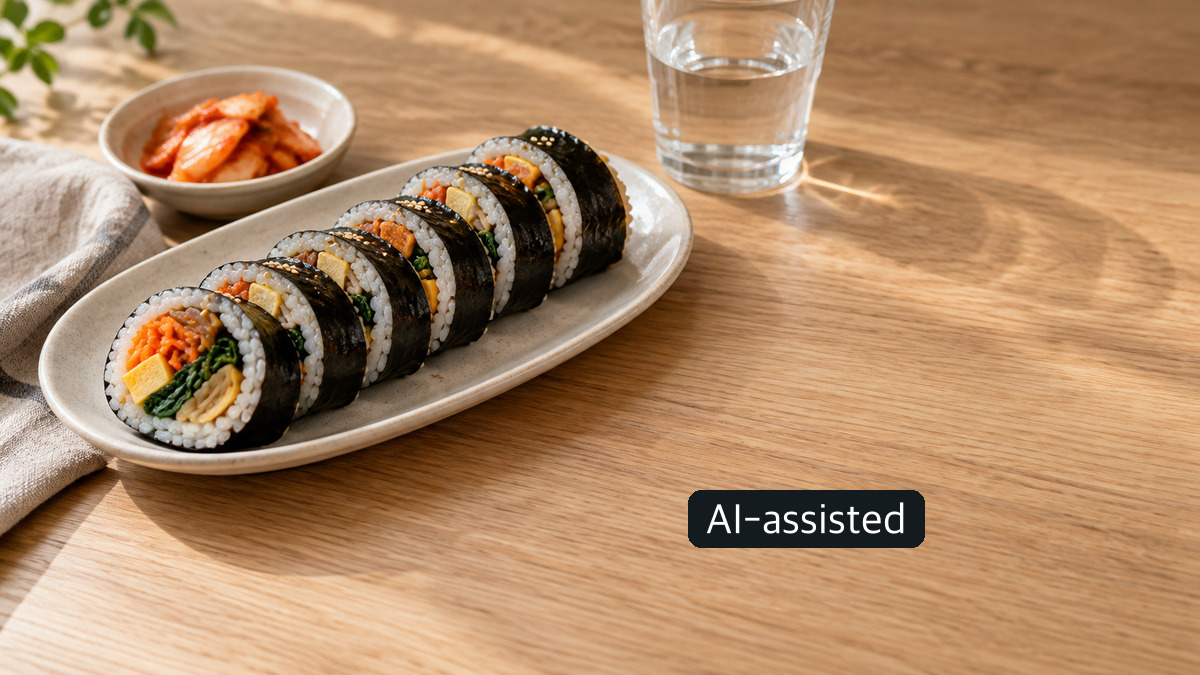
Source checked October 16, 2026. The Korean Consumer Agency (KCA) compared twelve convenience-store gimbap rolls: four tuna, four bulgogi and four plain/assorted products. This is a quality comparison, not a recall or withdrawal notice. The findings concern the particular products sampled at that time; they do not establish the properties of every product or later production batch. The photographs here are generic conceptual scenes, not KCA's tested products.
Check the sodium figure before making a meal of it
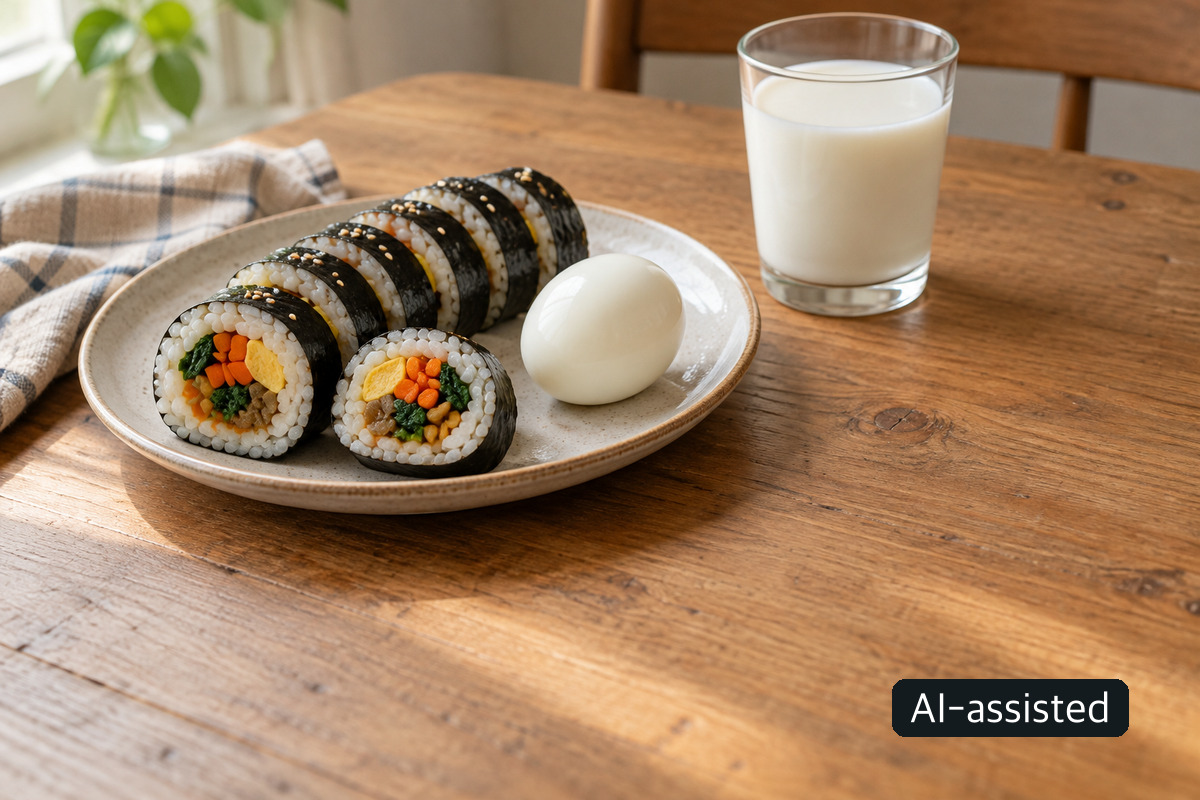
A single tested roll contained 760–1,393 mg sodium, equivalent to 38–70% of the 2,000 mg daily nutrition reference value in the original Korean report PDF. Energy ranged from 353–533 kcal. Lower energy does not imply lower sodium. If you pair a roll with instant cup noodles, check both labels rather than treating the meal as a single low-salt item. KCA also suggested foods such as milk and eggs to complement the meal, but that general suggestion cannot override an individual's allergy or dietary restrictions.
Filling percentages do not form a single ranking
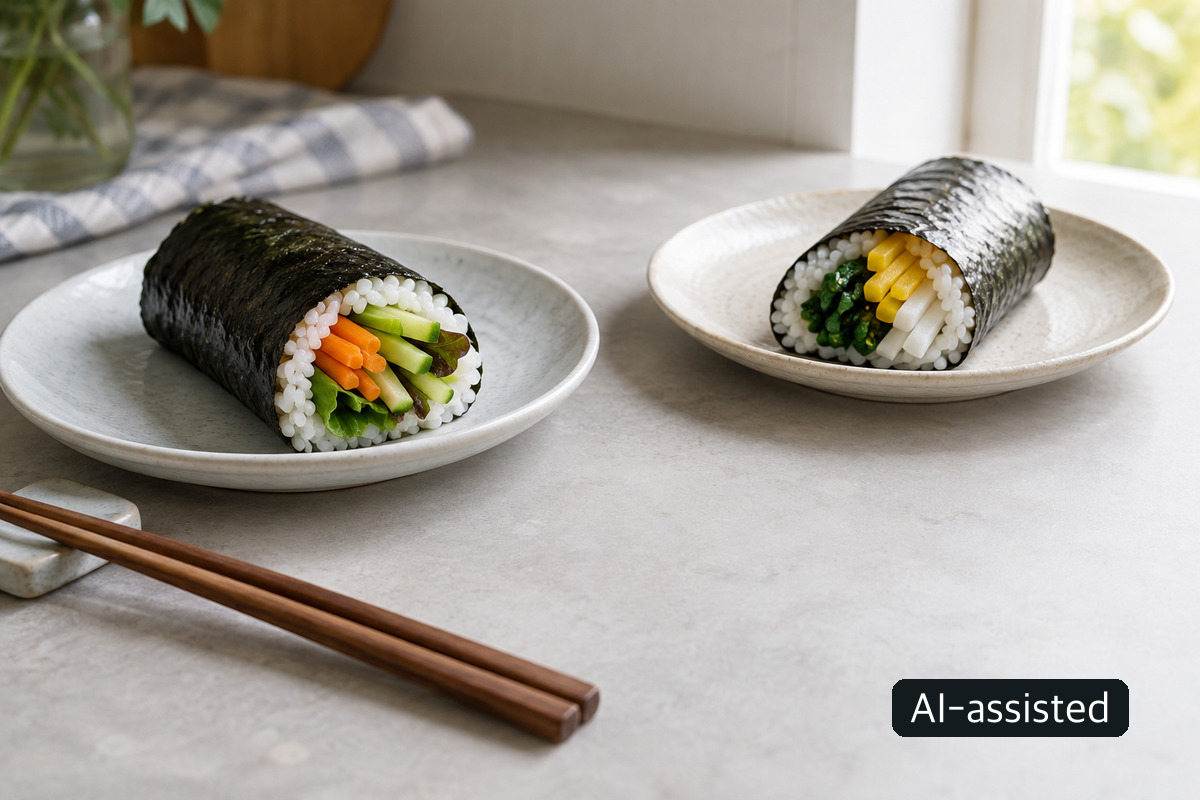
For four tuna rolls, tuna mass as a share of total roll mass ranged from 16.5–21.9%. For four bulgogi rolls, bulgogi mass as a share of total roll mass was 13.1–23.7%. The measure for four plain/assorted rolls was instead the combined mass of all fillings other than rice and seaweed: 36.9–45.1% in the product-by-product table on page 11 of KCA's PDF. The report's earlier summary on page 2 gives 36.8% as the minimum for that last category, an internal discrepancy that we are not silently resolving. These percentages describe different ingredients, so the highest number across categories is not a meaningful “overall winner.” Check ingredients and allergen labeling as well as quantity.
All twelve met the specified checks—not every possible safety test
For the twelve sampled products, KCA reported compliance with the applicable standards in its tests of selected preservatives and sweeteners, heavy metals, microorganisms and foreign material, and in its review of nutrition, allergen and origin labeling. The announcement does not say contaminated rolls were found or recalled. Conversely, passing these specified tests does not certify all convenience-store rolls, all later batches or untested hazards. Read the package and storage instructions on the item you actually buy.
Dated prices are not today's checkout prices
The twelve listed single-roll prices ranged from KRW 2,800 to KRW 3,600. Within a category, plain rolls cost KRW 2,800–3,000, tuna rolls KRW 3,100–3,400 and bulgogi rolls KRW 3,200–3,600—a KRW 200–400 spread depending on category. The across-sample spread was KRW 800. These are the prices reported for the comparison, not live stock, a current checkout quote or a guaranteed discount. Membership offers and monthly promotions should be checked at the shop.
Three checks at the shelf: 1) sodium and allergens; 2) which fillings and how much; 3) today's actual price. The source separately lists labelled product weights and measured weights: do not use them interchangeably. KCA said the detailed comparison would be posted on Consumer24's comparison section; this article does not claim to have confirmed that later posting.
For a concise Korean version, see the Life Mokcha Naver article.
About the Author
Life Mokcha's editorial team checked the KCA release dated October 15, 2026 against its original Korean PDF tables for nutrition, filling composition, tested safety and price. We did not test future production or verify current store prices.