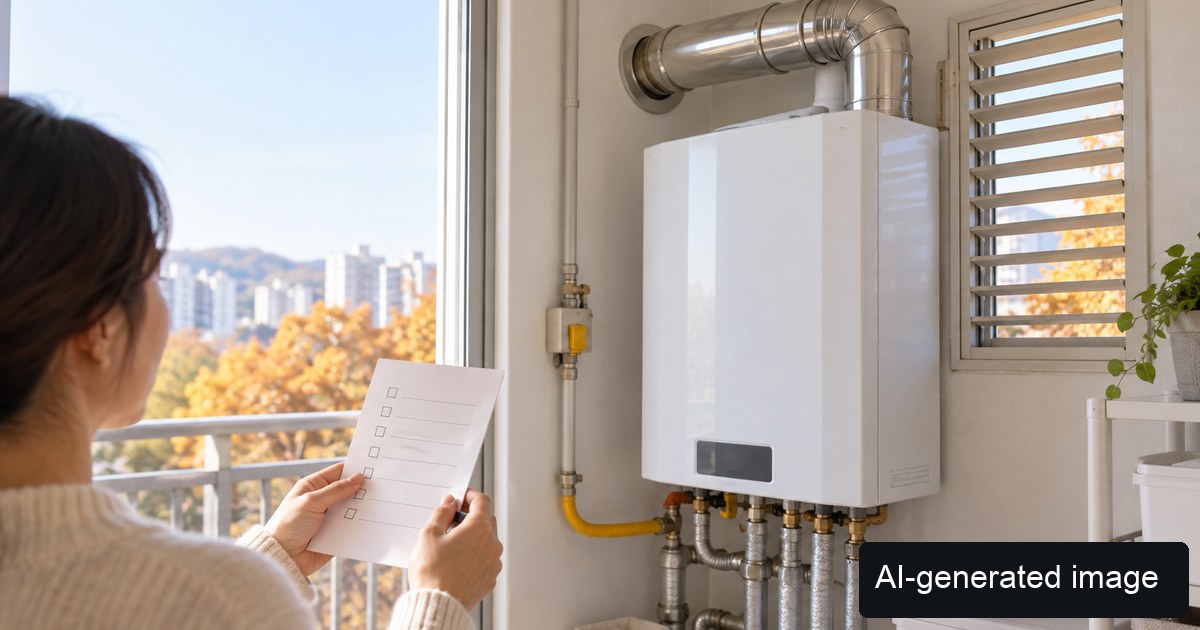
Checked October 31, 2026. Korea's Ministry of the Interior and Safety issued a winter boiler-safety notice on October 30. For a household using an individual heating boiler, its practical message is to inspect the exhaust flue, connected pipes and ventilation opening before the first run to reduce fire and carbon monoxide hazards. This guidance is about domestic boilers; the release's camping-heater advice is a separate topic.
A pre-use visual checklist
- Clear combustibles. Remove paper and other flammable items from around the boiler.
- Look at the flue and piping. Check whether the exhaust flue appears blocked or disconnected and whether pipes show corrosion or deformation. If anything looks wrong, do not dismantle or repair it yourself; arrange a professional inspection.
- Keep the vent open. Do not block the boiler-room ventilation opening. The ministry also advises installing an indoor carbon-monoxide (CO) alarm. An alarm does not replace ventilation or equipment checks.
- Watch the first operation. Smoke, flames or unusually hot air, an abnormal indicator light, or unfamiliar noise, vibration or smell call for a professional check rather than continued use.
The original ministry PDF records 790 domestic-boiler fires nationwide over 2021–2025 and 87 in November, compared with a monthly average of 66. Those are historical aggregate figures, not an estimate of the risk in a particular home. They explain why the first heating period deserves attention.
If CO exposure is suspected
Headache, dizziness, vomiting or weakness can be warning signs. Move immediately to the open air or another well-ventilated place and seek medical care. For an emergency in Korea, call 119. Do not remain indoors to troubleshoot a suspected gas or combustion problem.
The same release separately warns about camping heaters. It advises avoiding charcoal and other products that can generate substantial CO inside tents when possible, and using sleeping bags or warm-water bottles for warmth. Its mention of ventilation and portable alarms if heating equipment is nevertheless used is not a claim that an alarm makes an enclosed tent safe.
Bottom line: Clear combustibles, visually check the flue, pipes and vent, and request professional help when something seems abnormal. The cover is an AI-generated conceptual image, not a technical installation example. A shorter Korean checklist is on Life Mokcha's Naver blog.
About the Author
The Life Mokcha editorial team compared the ministry release with its original PDF and separated home-boiler checks from camping advice.