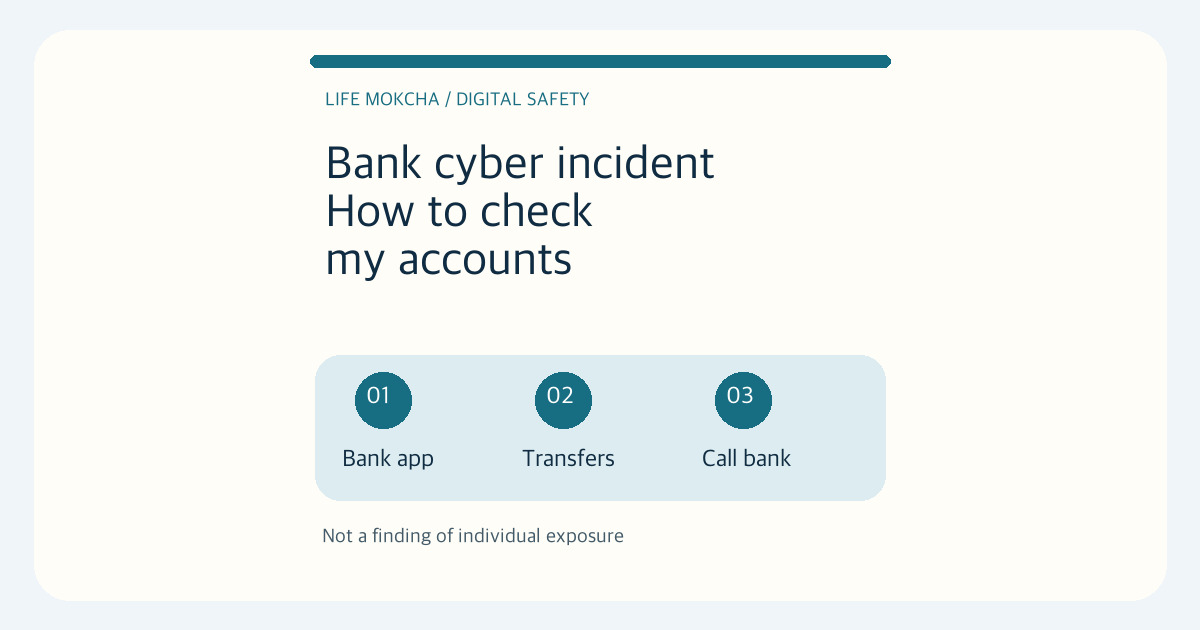
A report of an attack on Korean financial institutions is not proof that your own account or personal data was compromised. Open the app or website of the bank you actually use by a route you already trust. Check its notice and your recent account activity. If you need help, find the bank’s official customer-service number independently rather than calling a number in a suspicious message. These are editorial consumer checks, not a regulator-issued test for identifying victims.
Checked on October 5, 2026 (KST). The cover and two figures are original code-drawn explanatory diagrams, not screenshots of a bank’s service or photos of an incident.
What the October 2 briefing actually says
The Financial Services Commission’s October 2 PDF mentions a September 30 information-leak incident at Shinhan Bank and further harm following cyberattacks against other major financial companies, including KB Kookmin Bank. The FSC convened an emergency meeting with the Financial Supervisory Service, the Financial Security Institute and industry representatives. It asked financial firms to inventory and inspect externally accessible systems, strengthen authentication and access control, and rapidly share threat information. The agencies said they began on-site investigations on receipt of reports and would supervise consumer protection and compensation by affected firms.
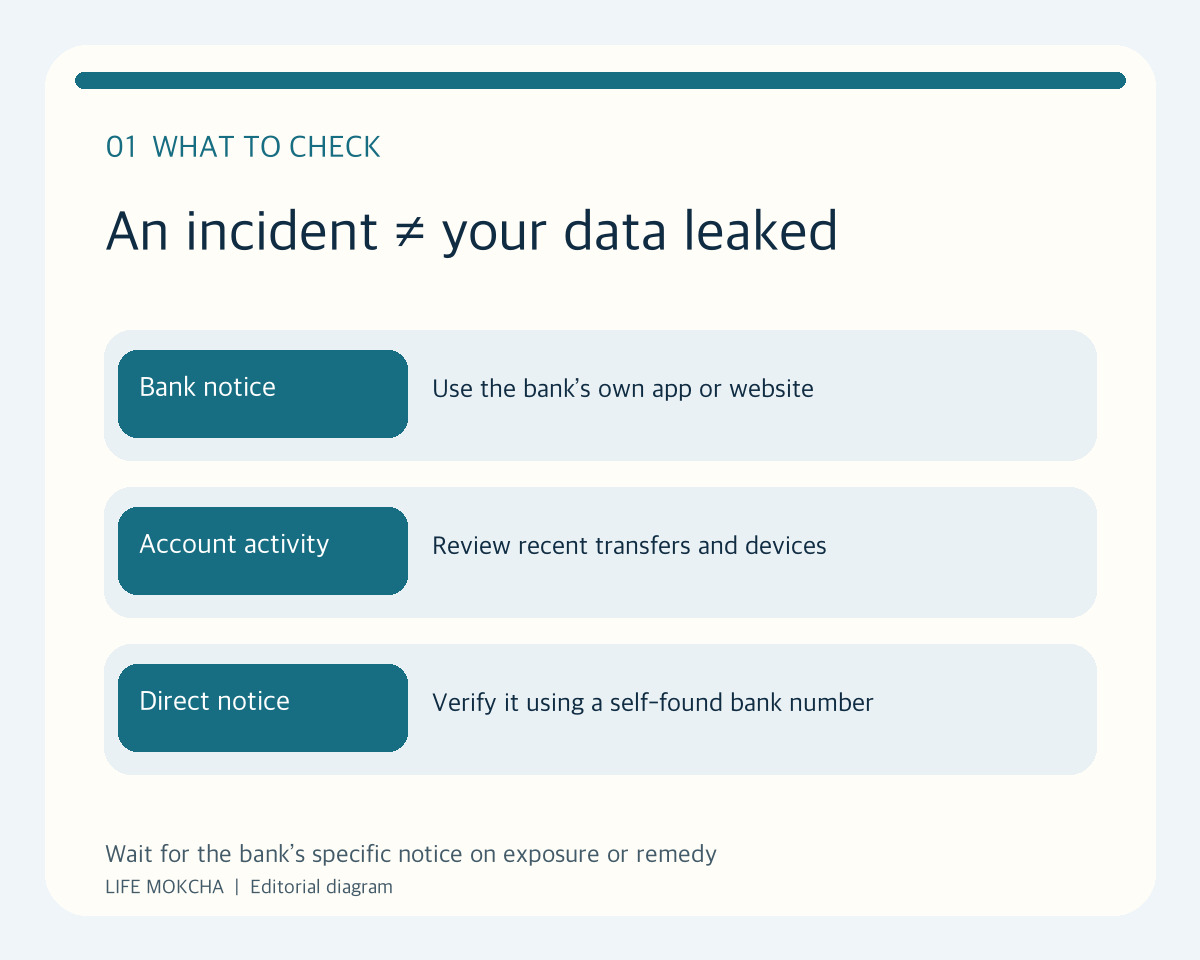
The briefing does not provide a list of individual affected customers, a customer-level exposure checker, the exact data leaked from your account, or a fixed compensation amount. Look for a notice from your own institution about your particular position. A cyberattack on a financial firm and confirmed access to every customer’s account are different claims.
A practical check, in order
- Read your bank’s own notice. Navigate to its app or web address yourself. Compare any message addressed to you with the notice in that official channel; do not treat a link embedded in an unexpected text as verification.
- Review the accounts you hold there. Look at recent transfers and withdrawals, alerts you configured, and devices or login history where the bank offers those controls. Menus vary by institution. If a transaction is unfamiliar, contact that institution immediately.
- Verify any caller or message. Do not disclose one-time codes or passwords, install a remote-control app, or transfer money to a supposed “safe account” because someone claims to be investigating an exposure. Obtain the bank’s number separately and ask whether the notification is genuine. Wait for the bank’s specific notice before treating exposure or redress as settled.
If an unauthorized transaction or fraud demand is already present
Contact the financial institution without waiting for a perfect evidence bundle. Explain the transaction and ask about available blocking, payment-suspension and remedy procedures. Report suspected criminal fraud to 112 as well. See the Korean National Police Agency’s consumer response guidance. Contact or reporting does not guarantee a refund. Preserve transaction times, statements and messages, but do not delay urgent contact while collecting them. For language assistance, ask the bank what interpretation or overseas contact routes it currently offers; this briefing does not prescribe a universal English hotline.
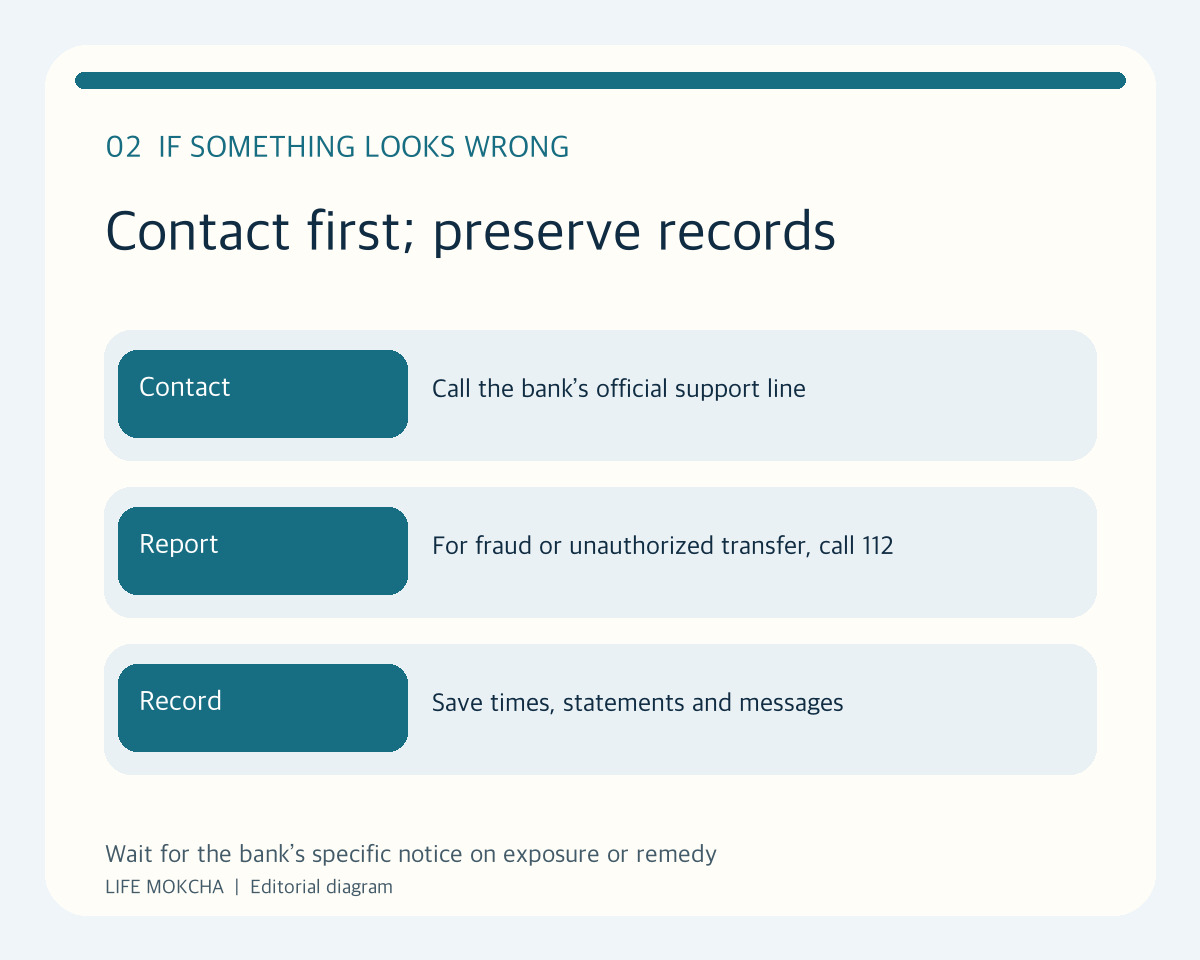
This piece concerns checking an official bank security notice, not diagnosing a scam call. For a separate distinction between Korean scam consultations and police reports, see our voice-phishing response guide. The quick Korean checklist is on the Life Mokcha Naver post. Neither article establishes that every customer is exposed or entitled to compensation.
About the Author
Life Mokcha’s editorial team separates the regulator’s industry-level statement from reader actions. Your own bank and the relevant agencies must determine individual exposure, transaction controls and remedies.