
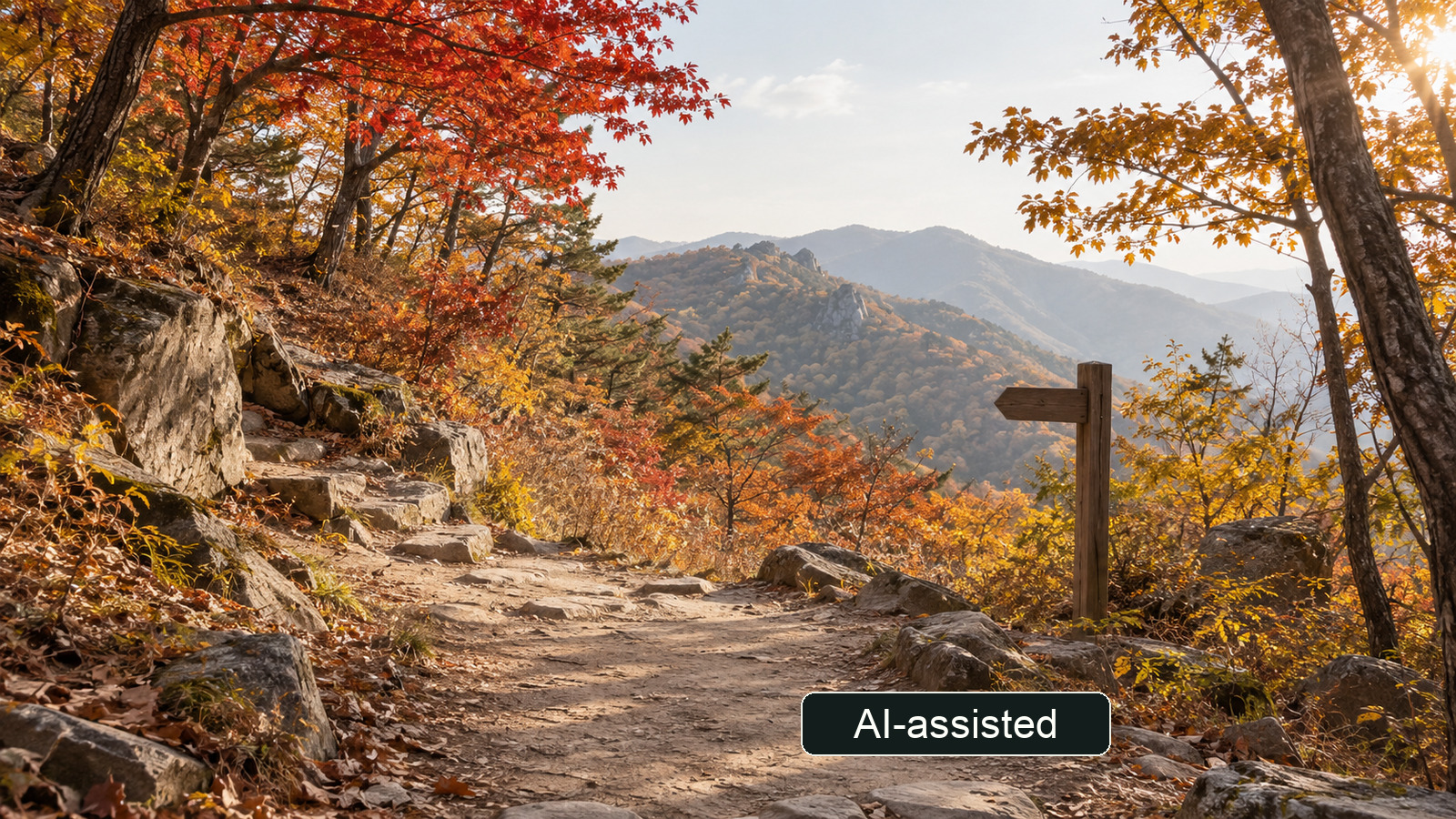
If you are heading out to see autumn foliage, plan your descent before sunset, not just your arrival at the summit. The Korean National Fire Agency's figures for 2023–2025 record 30,583 mountain rescue cases nationwide and 21,466 people rescued. The annual average number of people rescued was 7,155. A rescue case and a rescued person are different units: do not read those totals as the number of unique hikers who each had an accident.
What the October figure does—and does not—tell you
In the agency's October 2026 release, October accounts for 12.4% of annual rescue cases, the largest monthly share in the figures presented. By incident type, slips and falls accounted for 9,806 cases (32.1%), getting lost and search operations for 8,954 (29.3%), and personal medical conditions for 3,149 (10.3%). These are categories of recorded rescue cases over three years; they are not a forecast for your chosen mountain, a live trail-status report or your personal probability of injury. The sensible takeaway is to choose a manageable route and stay on marked paths, even when a shortcut looks tempting.
If you need help, give 119 a usable location
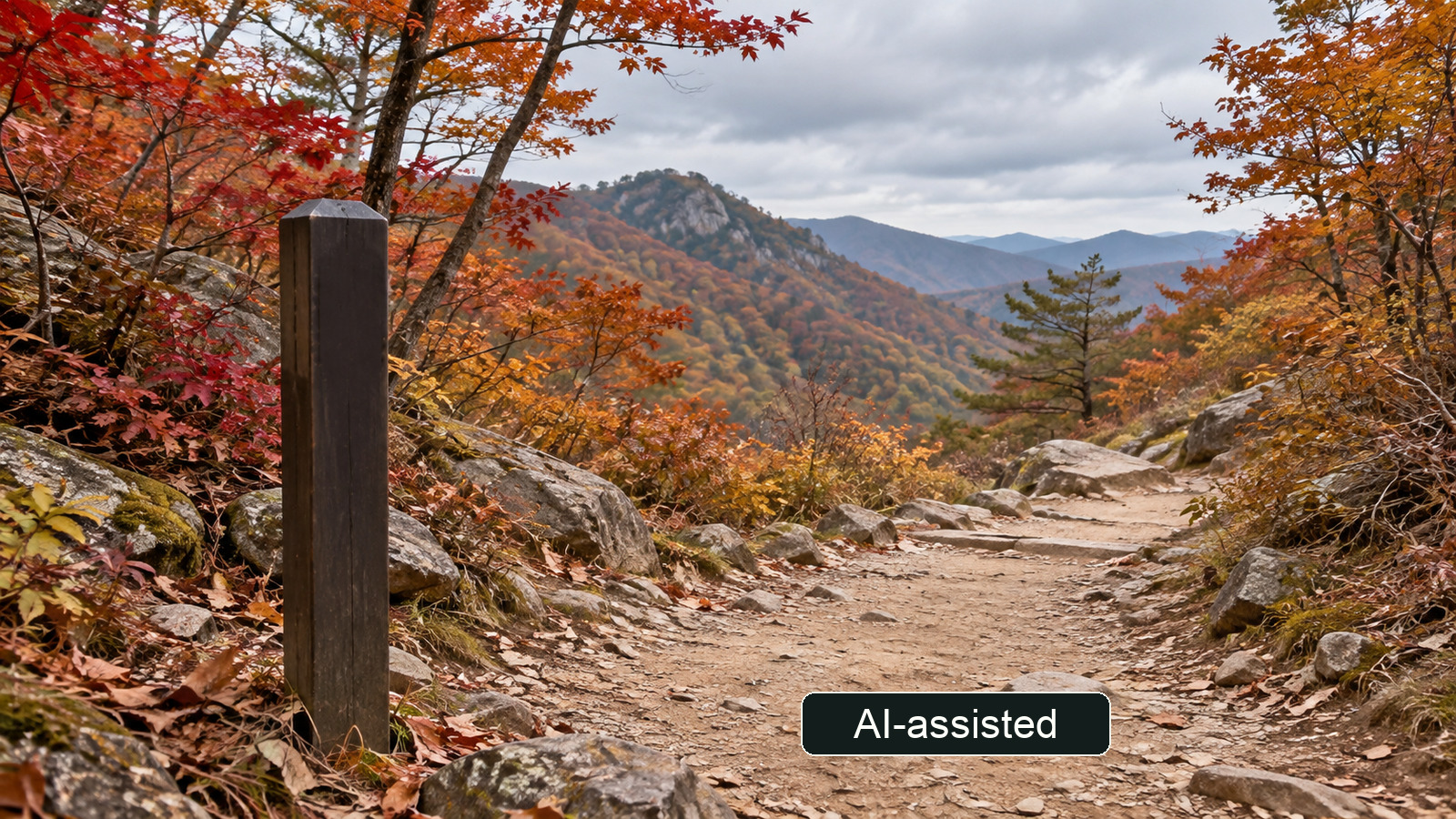
In South Korea, call 119 immediately if you are injured, face a medical emergency or become lost on a hike. Look for a national grid reference sign (국가지점번호판) or a mountain location marker (산악위치표지판) along the trail, and read its location information to the dispatcher. If you cannot see a marker, describe a distinctive nearby landmark or terrain feature as precisely as you can. “Somewhere near the top” is less useful than an identifiable reference. Follow the dispatcher’s instructions for your situation.
The agency also advises using emergency supplies from a trail-side first-aid box (간이구조구급함), where one is available and appropriate, to provide possible first aid; keep warm and wait calmly for rescuers. Do not assume that every trail section has a sign or a box. These steps are general safety guidance, not a substitute for the dispatcher’s directions or medical assessment.
Seven checks before and during a hike
- Check the weather and avoid hiking alone. Conditions can change; reassess before leaving.
- Pick a route that fits your fitness and how you feel that day. Leave enough energy for the return.
- Start early and descend before sunset. Do not plan the last stretch in the dark.
- Warm up lightly before you set off.
- Carry a light outer layer for temperature changes.
- Stay on designated trails. An apparent shortcut may leave you without a reliable route.
- Do not hike after drinking alcohol.
Before departure, check the latest local weather and any trail closures separately. The underlying release is labelled for the October 13, 2026 morning papers, with online publication stated as October 12; those are publication times, not the dates of the individual accidents. The historical national totals cannot establish that a specific path is currently open or safe. This guide also cannot evaluate an individual medical emergency.
For a shorter Korean-language sequence on describing your location to 119, see Life Mokcha's Naver post.
About the Author
Life Mokcha's editorial team checked the agency release against its attached Korean HWPX document, keeping rescue cases separate from rescued people and translating its location-reporting and seven hiking precautions into a reader checklist.