Government source material checked October 12, 2026. If you live in a Korean apartment complex and have a milk carton in your hand, the first question is not simply “paper or general waste?” The government's October 7 explainer says to put drink cartons in a separate paper-carton collection bin or bag, not among newspapers and corrugated boxes. But whether your building has that collection point—and whether a legal requirement is already in force—are different questions. The ministry's five-page September release separates a voluntary early rollout in October 2026 from a planned January 1, 2027 obligation for the targeted apartment-building category.
First determine whether the announcement covers your building
The Ministry of Climate, Energy and Environment describes the targeted buildings as 의무관리 대상 공동주택, apartment complexes subject to mandatory management under Article 2 of the Enforcement Decree of the Multi-Family Housing Management Act. Its examples include complexes with 300 or more households, but the release's “300 or more, etc.” is not a complete eligibility test for a particular address. Ask the building management office rather than inferring coverage from a single number.
The ministry referred to about 144,000 apartment buildings (동) in its announcement. That is neither 144,000 households nor 144,000 entire complexes. More importantly, it does not demonstrate that every such building already has a dedicated carton collection point.
October 2026: voluntary early rollout
- Government wording: The ministry announced voluntary, proactive separate collection centered on the targeted complexes; the later government card names October 1 as the start.
- Check locally: Whether your complex operates a carton bin or bag and its local instructions.
January 1, 2027: planned obligation
- Government wording: The ministry said it planned to amend the separation guideline and make separate collection mandatory for those targeted complexes.
- Check later: Whether the amendment has been promulgated and how your local operator implements it.
The card uses the broader phrase “full implementation” for 2027. Read it with the release's specific building scope and prospective language, not as proof that every Korean household faces a present legal duty. The planned requirement should be checked again against the final guideline before it takes effect.
“Paper carton” is not the same collection stream as waste paper
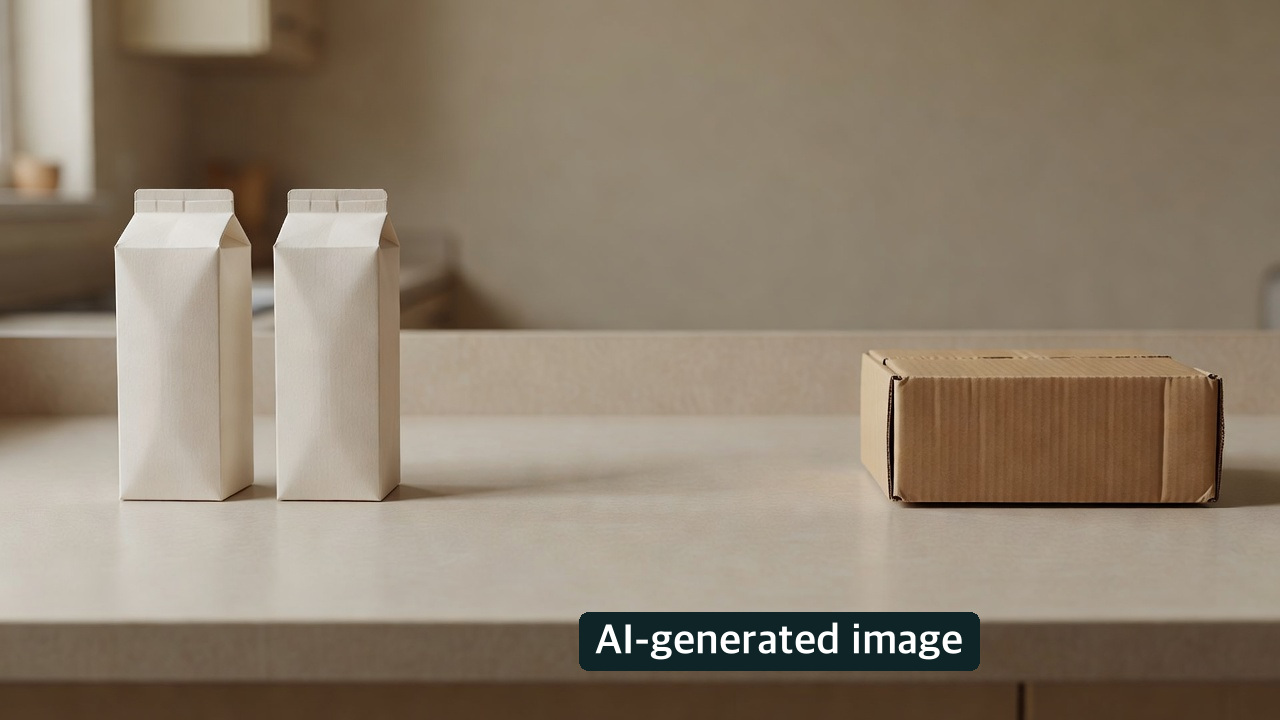
The government card groups regular cartons (일반팩) and aseptic cartons (멸균팩) under “paper cartons (종이팩).” A milk carton is its example of the first; soy-milk, juice and packaged-water cartons are examples of the second. These are illustrative product categories, not a laboratory determination of every brand's packaging. Check the marking on the actual carton and the notices at your collection point.
Both examples are kept out of the ordinary newspaper/cardboard bin in the explainer. That is the immediate household decision. The ministry's September release says mixing cartons with waste paper or putting them in volume-based trash bags has undermined recycling; however, a household's separate disposal, actual collection, industrial sorting and manufacture into a new product are four different events. A container placed in the correct bin is not proof it was ultimately recycled.
Prepare the carton, then check the building's collection rule
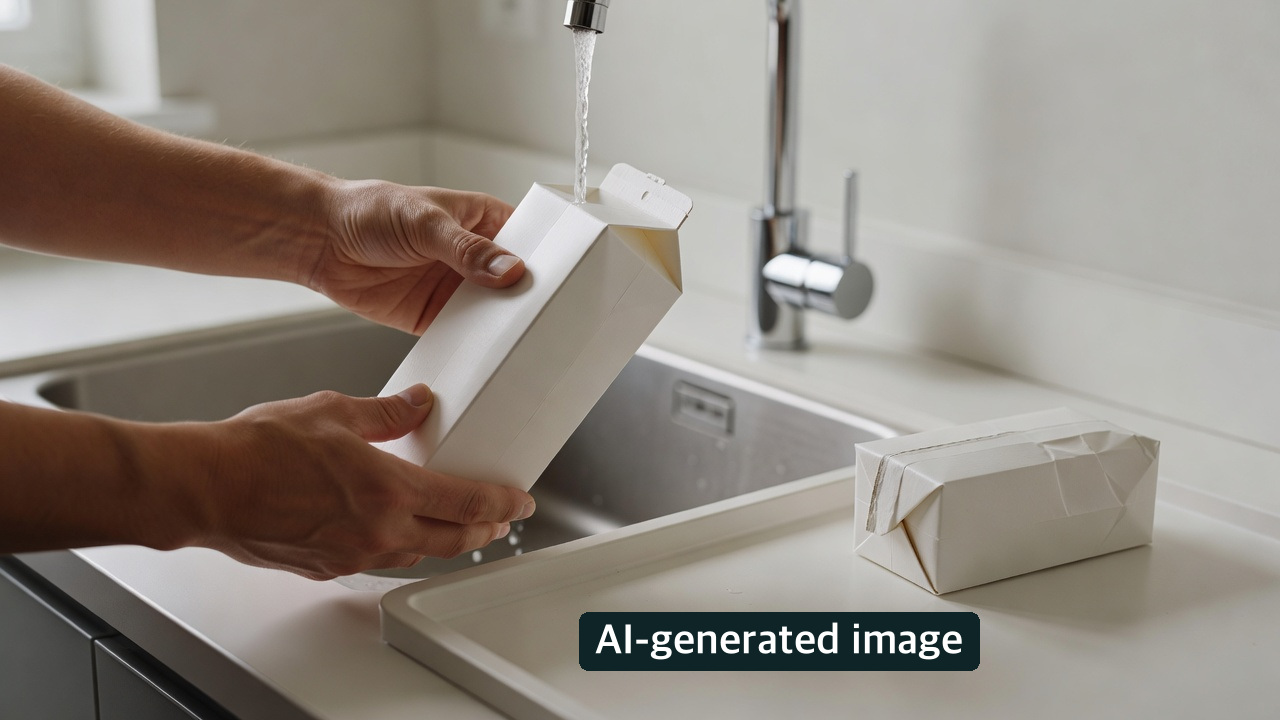
The government's illustrated guide and accompanying text provide two preparation paths:
- Regular carton: empty → rinse → flatten → put in the separate carton stream.
- Aseptic carton: cut open → empty and rinse → flatten → put in the separate carton stream.
Open containers safely. The retained sources do not establish one universal collection day, bag colour, installation date or apartment-by-apartment rule for whether the two types are deposited together. Nor does the ministry's business agreement prove any particular sorting machine has been installed near your home.
Questions for the building management office (an editorial checklist, not an official form):
- Is this complex within the targeted managed category, and is separate collection already operating here?
- Where is the dedicated paper-carton bin or bag? What does its actual label accept?
- Are regular and aseptic cartons collected together or separately at this site?
- What local day or contamination rule, if any, applies?
The agreement lists producers' funding and product-purchase commitments, packaging manufacturers' design and sorting-infrastructure support, and recyclers' collection and processing roles. Those are assigned roles and intentions, not verified collection rates, guaranteed new products or a site-level service record. Use the release to understand the policy's intended direction; use the operator's current instructions to decide where to place a carton today.
For a shorter Korean, step-by-step version, see the Life Mokcha Naver guide.
About the Author
Life Mokcha's editorial team compared the original five-page ministry release with the government's later household-sorting card, keeping the voluntary rollout and proposed mandate separate. It has not verified a subsequent guideline amendment or any individual building's collection arrangements.